
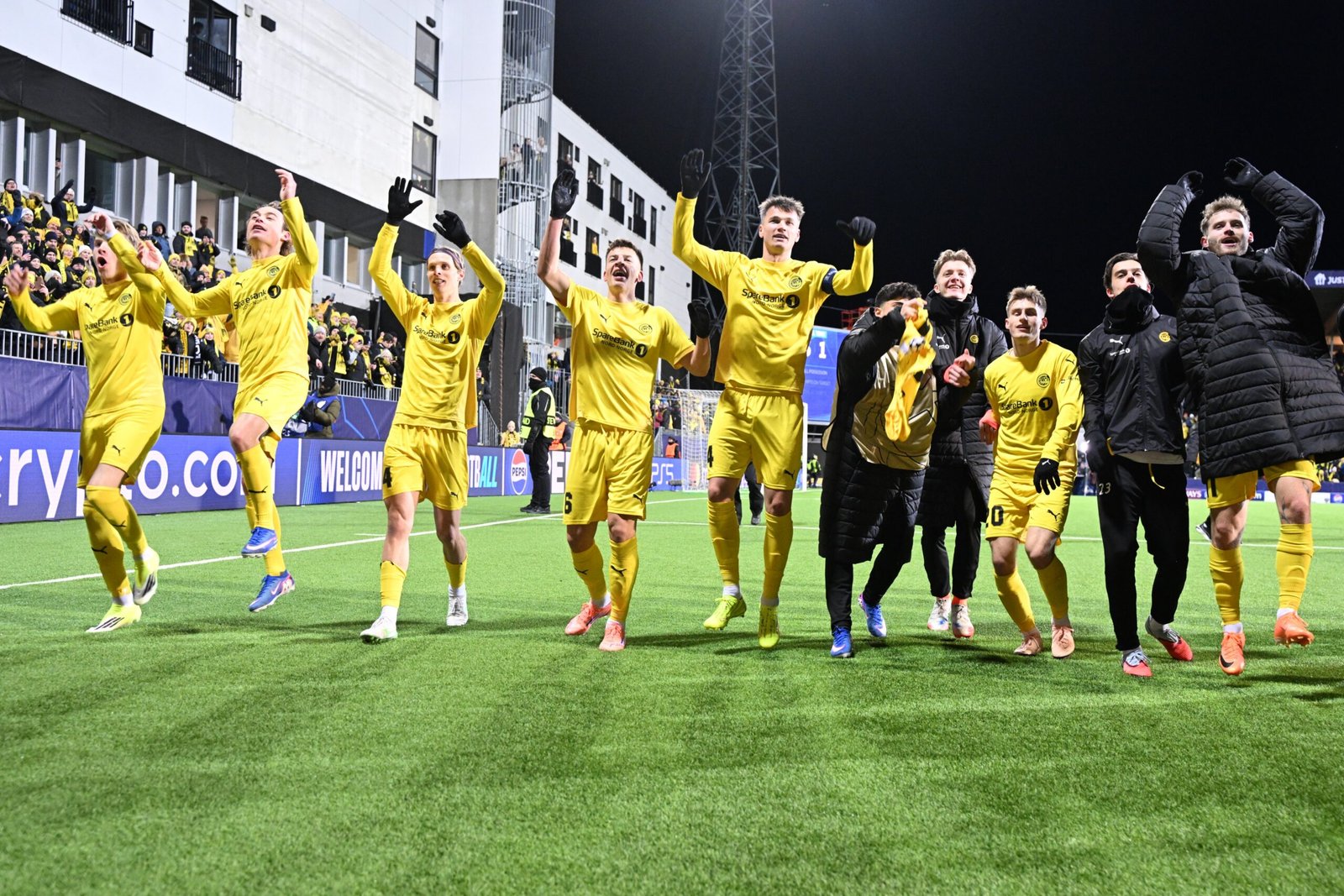
Bodo/Glimt became only the fourth team in Champions League history to win three consecutive matches against teams that have been finalists before, after their surprise 3-1 victory over Inter in their elimination playoff first-leg on Wednesday.
The Norwegian side, on the brink of league phase exit after picking up just two points in their opening five games, but have miraculously turned around their campaign, after seven points in a difficult final three fixtures.
Although their progress into the knockout rounds came as a surprise given how they positioned before the turn of the year, it is not as shocking to imagine if they could have gotten here at the start of the season, for those familiar with the club.
Despite being from one of the countries that are not so ranked in club football, Bodo/Glimt have earned themselves an infamous popularity having stood up to some of the clubs from Europe’s top divisions in recent years.
Those familiar with the Conference League would still remember how this club dismantled Jose Mourinho’s AS Roma in a group meeting in 2021, winning 6-1 in Norway, although the Portuguese manager ultimately had the last laugh, winning the return leg of their quarter-final clash 4-0, after losing 2-1 in Bodo.
Their rise in European football has been built on a formidable home record, but there were concerns about whether they could replicate it in the premier competition, and now, there could be no doubts about their mentality, especially at home.
Bodo/Glimt: The unbeatable landlord of the Aspmyra
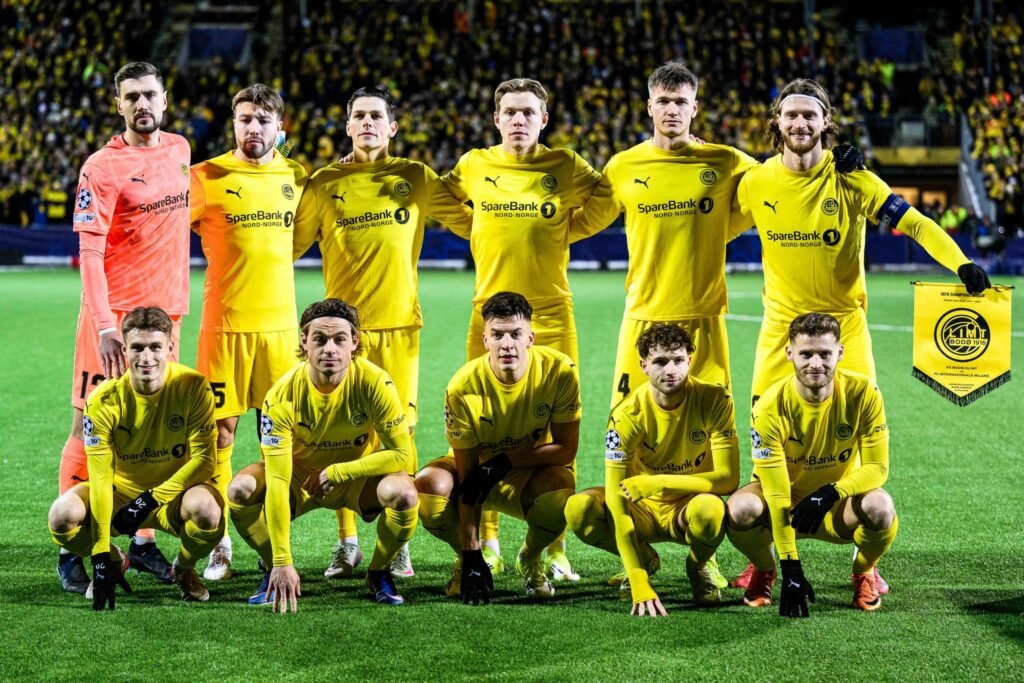
Deep in the Arctic Circle, Bodo’s Aspmyra Stadion has evolved into a burial ground for European giants, and for the club, the home advantage is no myth; it is a clinical combination of technical familiarity and a hostile environment.
Central to this is their artificial turf, a surface that remains lightning-fast even as temperatures plunge to -10⁰C. While visiting teams struggle to find their rhythm, Glimt players utilize the consistent bounce and speed to execute their signature liquid football.
The atmosphere is fueled by their fans, Den Gule Horde, meaning The Yellow Horde. Bundled in yellow and black, these fans create an electric, intimate cauldron that defies the stadium’s modest 8,270 capacity.
Between late 2021 and late 2022, Bodo/Glimt secured 14 consecutive home wins in European competition, a feat that placed them third on the all-time list, trailing only the legendary streaks of Bayern Munich (16) and Barcelona (15).
Whether it is the biting Arctic wind or the plastic pitch, the Glimt effect has turned a small Norwegian town into one of the most feared destinations in world football, and the synergy between the pitch and the stands has produced a historic fortress.
Giant-killing specialists

After a brief participation in the Uefa Cup at the turn of the century, Bodo Glimt made their return to Europe proper in 2021 with the Conference League, creating an impression of a team ready to dominate.
Unfortunately, they didn’t generate deserved publicity as it was the maiden edition of the third tier of European continental club football, although the victory over Jose Mourinho’s Roma put their name on the lips at some point.
Although they ultimately lost out to Mourinho’s team in the quarter-finals, they met Roma four times, won the two at home, including a 6-1 victory in the group stage, but a 4-0 quarter-final second-leg defeat overwhelmed their 2-1 first-leg win.
In October 2021, when they defeated AS Roma 6–1, Bodo/Glimt became and remains the only team to score six in a single match by a team coached by Jose Mourinho in a career spanning over 1,000 matches.
During that Europa Conference League run, they scored 39 goals (including qualifiers), setting a record for most goals scored by any Norwegian club in a single European season, surpassing the previous benchmarks set by Rosenborg in the late 1990s.
Kjetil Knutsen’s men achieved their 14 consecutive home wins in October 2022 before a narrow 1-0 loss to Arsenal snapped their streak, but they’ve remained resilient at home, winning nine of the next 14 in Norway before the start of this season.
They also reached the Europa League semi-finals last season, beating FC Twente, Olympiacos Piraeus, and Lazio on their way to facing eventual champions Tottenham Hotspur in the semi-finals.
They became the first northernmost club ever to participate in the UEFA Conference League knockout stages, and the Europa League semi-finals, but suffered losses both home and away to Ange Postecoglou-led Spurs.
Making Champions League history

After beating Sturm Graz 6-2 on aggregate in the qualifying doubleheader, Bodo Glimt became the third Norwegian club to reach the Champions League proper, after Rosenborg BK in 1995 and Molde FK in 1999.
They are one of those teams no one would have given a chance, especially after trailing 2-0 at Slavia Prague in their opening game, before scoring two late goals to salvage a point, while also failing to win any of their first five games — three defeats.
With Borussia Dortmund, Manchester City, and Atlético Madrid their final three fixtures, the world had ruled them out to advance, especially with their opponents needing the points to back a top-eight finish.
But they conquered the mountain in front of them, drawing 2-2 away to Dortmund before beating Manchester City 3-1 at home, and shocking Diego Simeone’s Atlético Madrid 2-1 in the final league phase game to nick an elimination spot.
By finishing in the top 24 of the 36-team league phase, Bodo/Glimt secured a spot in the knockout phase play-offs, a feat never before achieved by a team based so far North in the Champions League era.
Becoming the face of Norwegian football
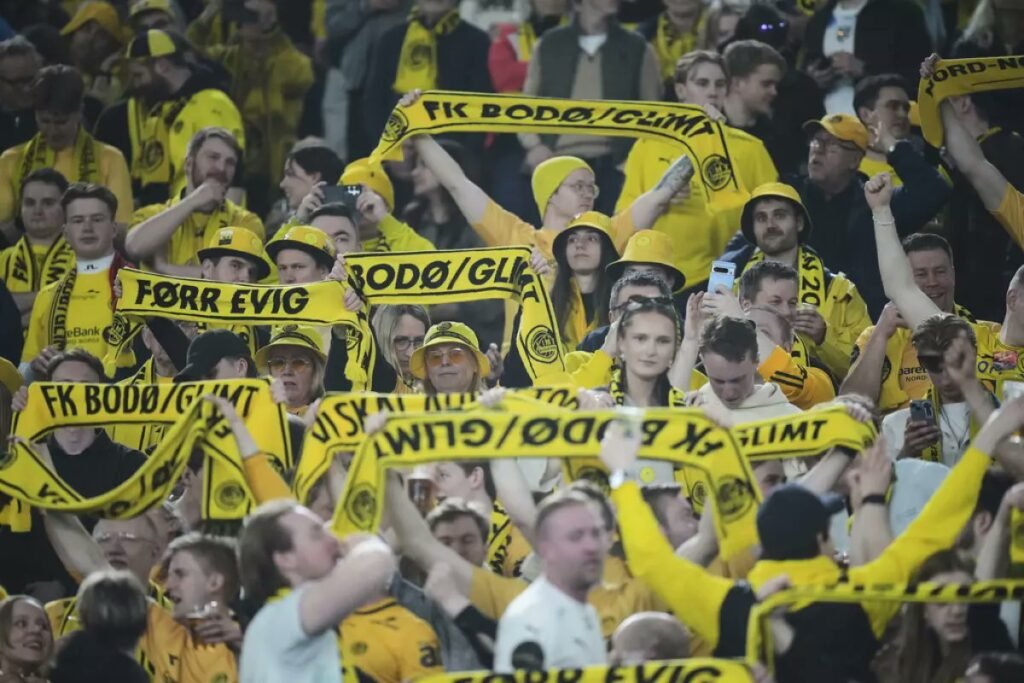
Rosenborg it was, in the 1990s, that originally put Norwegian club football on the map, but Bodo/Glimt has emerged as the face of Norwegian club football in the modern era, and the biggest secret to this has been their beautiful football and nostalgic home ground.
Bodo/Glimt also embodies the culture of Norwegian football. Just seven players in their entire squad are not of the country, and their manager, Kjetil Knutsen, also a Norwegian, has been in charge of the team since 2017. Nine of their regular starters are also indigenous.
They’ve also successfully stamped their authority on the domestic league, winning four titles since their return to the topflight in 2018, whilst never finishing out of the top two.
They recently secured a 3-1 first-leg home win over Inter in the Champions League elimination playoff and although the Italians will have a huge job to overcome this deficit, they can be thankful that it’ll not be played in Norway.
Nevertheless, Bodo/Glimt has not lost a game by more than a two-goal difference since a 4-1 league loss to Brann in September 2024, so it’s a massive advantage that they have, and history may await them in San Siro next week.
Bodo are good in possession, but are more dangerous without it. Their only three wins in the Champions League so far have come in games where they’ve been beaten for possession, an important detail Cristian Chivu will have in mind when he sets his team out for a Remontada.
Kehinde-Hassan Afolabi
