
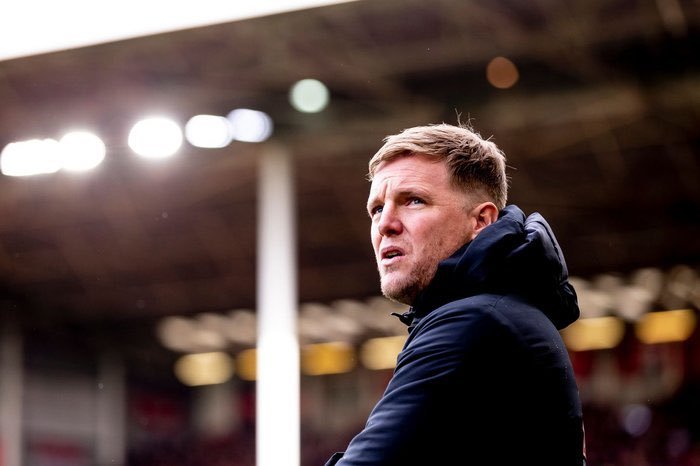
Eddie Howe and why the Newcastle United project is not taking off?
It’s been well over four years since the Newcastle United takeover by a consortium led by Saudi Arabia’s Public Investment Fund, a deal that sent expectations skyrocketing across the black-and-white side of Tyneside. Yet, the intervening years have largely yielded anti-climax.
Compared to other transformative takeovers in Premier League history, Newcastle’s project is faltering. This is despite the fact that they ended a long-awaited trophy drought with the Carabao Cup on March 16, 2025.
Their success has not been linear, at least not to the level expected of a club with such immense financial security. The problem does not stem from a lack of spending, but from a rigid adherence to certain personalities that reflect their current plateau.
While the Magpies have shown ambition in transfer windows, they have hesitated to make the ruthless decisions necessary to significantly alter their fortunes, instead succumbing to a state of mediocrity.
Learning from the playbooks of Chelsea and Manchester City, both of whom experienced successful top-flight takeovers since the turn of the century, it is clear that clinical ruthlessness is a non-negotiable requirement for a club in transition.
Newcastle United have failed in this aspect. Consequently, their project remains moribund. The gains achieved so far are not secure, and every summer now brings a fresh wave of anxiety as their marquee talents begin to look elsewhere.
Why is the Newcastle United project not taking off?
Five years ago, the St. James’ Park faithful would have pictured their club rubbing shoulders with the likes of Arsenal and Manchester City at the summit of the Premier League. After all, they possess the resources to do so.
Instead, the management has largely underwhelmed. Matters appear to be regressing, evidenced by a league standing where they currently languish in 13th place with only ten games to spare.
1. Boardroom failure evident in on-field performances
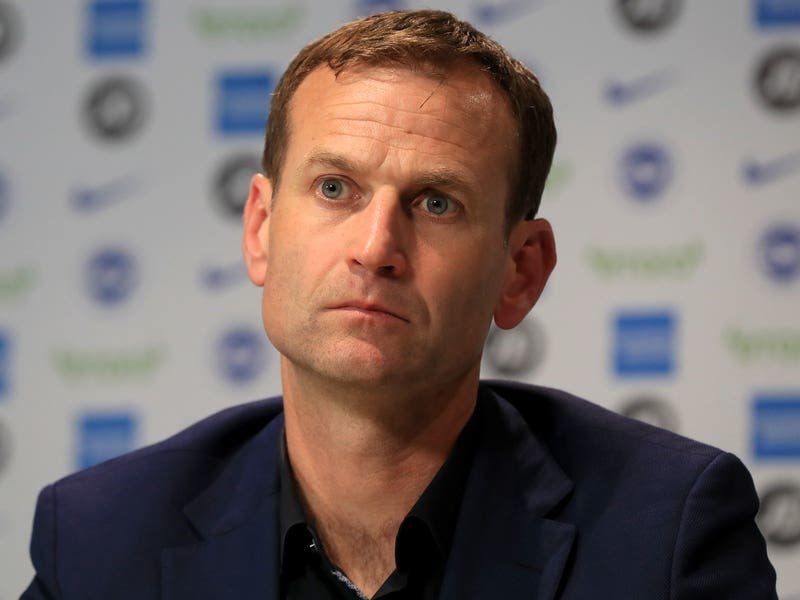
Following the takeover, the club appointed the highly-regarded Dan Ashworth as Sporting Director. He orchestrated the initial “takeover glow,” overseeing the arrivals of stars like Alexander Isak and Sven Botman.
However, the Englishman departed for Manchester United, and his successor, Paul Mitchell, has already been replaced by Ross Wilson, who arrived in October 2025.
From these sporting director appointments, the club has experienced a steady decline in recruitment quality. This regression is apparent in their targeted growth; at Newcastle, the previous years always seem to have been the better ones.
They achieved a fourth-place finish in 2022-23, their joint second-best campaign in the top flight this century, but failed to build on that momentum, missing out on European football entirely the following season.
2. Overcommitment to Eddie Howe
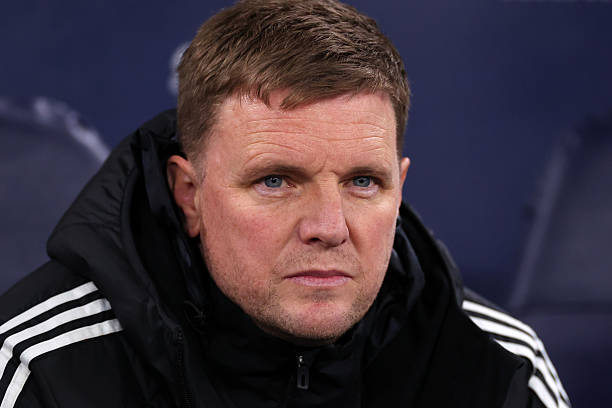
A pivotal factor in the project’s failure to launch is the decision to remain wedded to Eddie Howe, despite multiple opportunities to upgrade to a world-class tactician.
While Howe has given the club much-needed stability,. especially upon his arrival in 2021 when they looked relegation-bound, he appears to have reached the ceiling of what he can offer. His decision-making has become increasingly questionable.
When Roman Abramovich took over Chelsea, he quickly appointed Jose Mourinho, a man who had just won the Champions League with Porto. Manchester City followed a similar path by appointing Roberto Mancini, one of the world’s elite managers at the time.
These decisions established dynasties, and these managers didn’t just win silverware, they forged the identities that made their clubs the faces of modern English football.
Entering the sixth year of a £305 million investment, Newcastle have yet to take that leap, and with Crystal Palace recently clinching the FA Cup, a lone Carabao Cup success feels insufficient for a club of Newcastle’s stature.
3. Lack of pull and tactical identity
The Howe factor has also affected the club’s pull in the transfer market. Last summer, Newcastle did not just miss out on nearly a dozen primary targets, they also lost the face of their project, Alexander Isak.
This narrative is threatening to repeat itself because Italian midfielder Sandro Tonali is already being linked with Europe’s elite, as it becomes certain that Newcastle will play no continental football next season, unless they achieve the improbable by winning the Champions League or the FA Cup.
Failure to secure moves for primary targets has turned squad building into a nightmare. Furthermore, Howe has developed a habit of tasking players to operate out of their natural positions.Joelinton, signed as a striker, is now a permanent midfielder.
More recently, German striker Nick Woltemade, who arrived from Stuttgart in red-hot form, has seen his goals dry up and now being deployed in a deeper role.
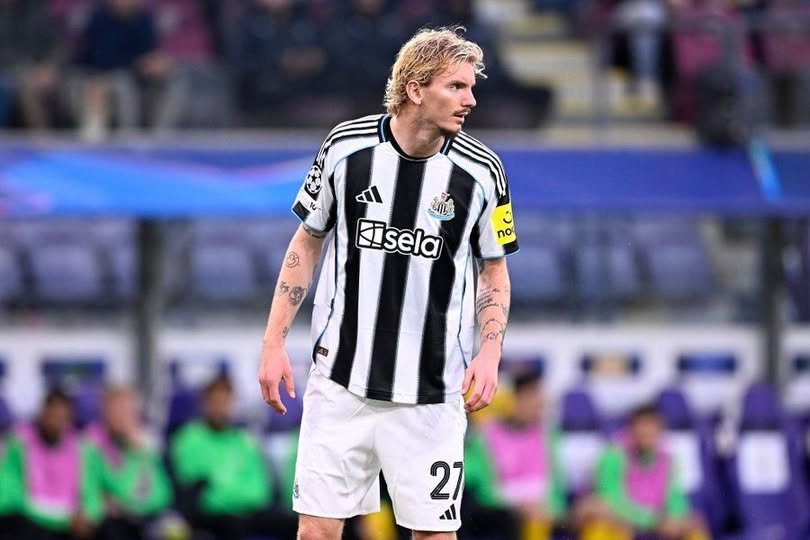
Nearly half of the squad that featured at the end of the first takeover season are still starting today despite the millions spent on recruitment, yet the board acts as though this stagnation was part of the script.
How Newcastle United can overcome the setback
Management of a football club is a complex endeavor, but for Newcastle, an upgrade on Eddie Howe seems to be the obvious solution to more than half of their current crisis.
His contract reportedly runs until 2029, but given the current form, it is unlikely he will see it through.
Surely Eddie Howe did not have the opportunity to give Newcastle United anything to cheer this season except that something out of the ordinary happened in the month of March, when they play City and Barça in the non-league competitions.
It remains to be seen whether Newcastle United will make that crucial decision to part company with Eddie Howe and make an upgrade, because going by history, that is just what their project needs to finally take off.
Kehinde-Hassan Afolabi
