
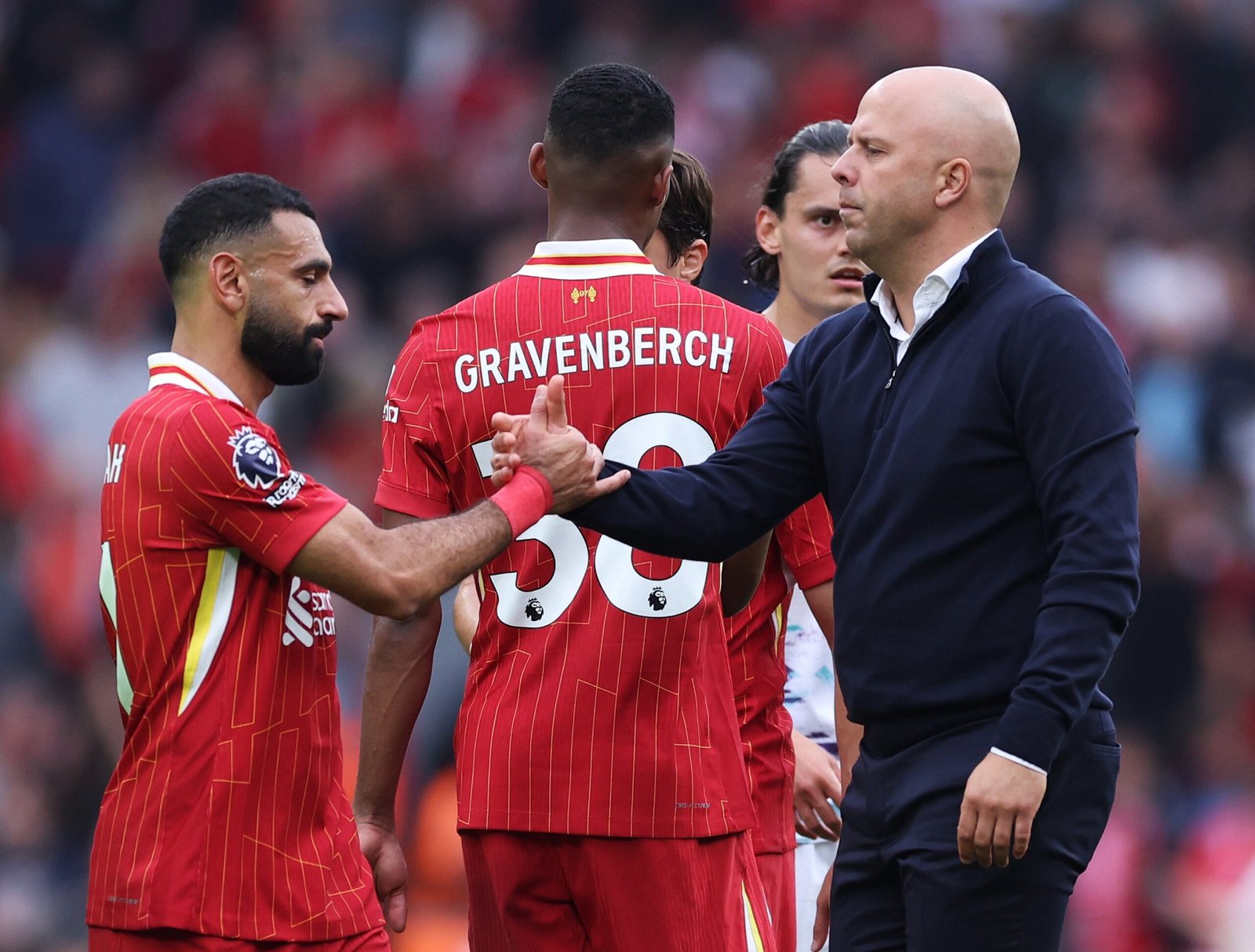
Mohamed Salah was left out of the Liverpool squad for the Champions League trip to Inter on Tuesday night as the club imposes disciplinary measures following the Egyptian’s explosive interview after being dropped from the starting XI for the third straight game.
The winger has struggled since the end of Matchday five, a drop of form that coincided with the club’s poor performances, and since then, they have gone from first place to mid-table in the league, while things are not going well on the continent either.
Liverpool have won just two of their last 10 Premier League games, placed 13th in the Champions League, and have been eliminated from the Carabao Cup in a humiliating home loss to Crystal Palace.
Mohamed Salah claimed he has been singled out by the manager, and someone in the club does not want him around any longer. Although the revelation in his interview has divided opinions, his words carried a lot of weight, and people are beginning to wonder what is going on behind the scenes at Liverpool.
Salah had struggled in Jurgen Klopp’s final months at the club following his return from the AFCON in early 2024, leading to the club’s poor run that ultimately saw them give up their advantage at the Premier League summit, and ended the season in third, behind Man City and Arsenal.
Is Liverpool too dependent on Mohamed Salah?
Last night’s win over Inter was Liverpool’s first away win in a UEFA Champions League match without Mohamed Salah featuring since November 2009 at Debrecen.
The evidence supporting the theory of Salah dependency is compellingly cyclical. The conclusion of Jürgen Klopp’s final season, 2023-24, provided the first dramatic proof of this phenomenon.
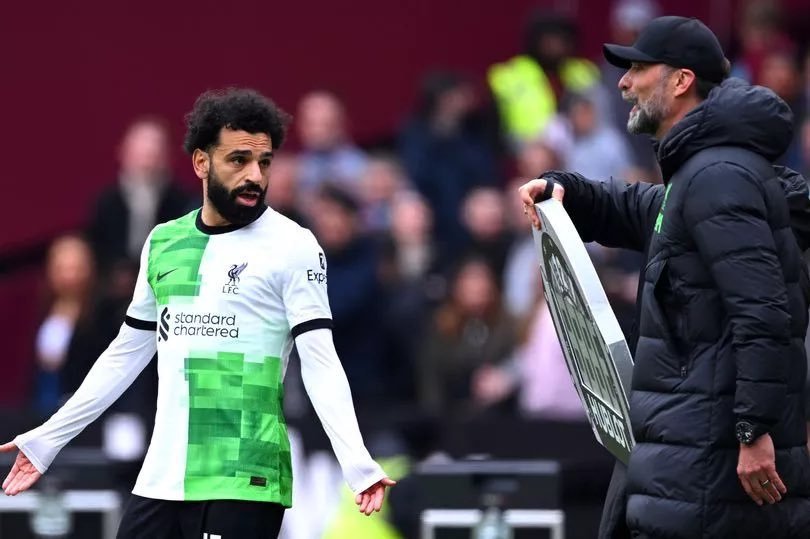
Liverpool were genuine contenders for the Premier League title and were at the top of the table in February, yet their domestic hopes spectacularly imploded in the run-in.
After returning from the African Cup of Nations, Salah struggled with a debilitating hamstring injury, which restricted his effectiveness in the crucial months of March and April, and that literally and ultimately cost Liverpool.
In the league matches leading up to Salah’s departure for AFCON, Liverpool averaged 2.3 goals per game and maintained an expected goals (xG) conversion rate above 1.2.
However, in the eight matches immediately following his return to the squad, where he was clearly battling fitness and form, that goal average dipped to a disastrous 1.4 per game.
The team recorded a staggering five draws and two defeats in that crucial spell, allowing both Manchester City and Arsenal to accelerate past them and ultimately finished the season in third place.
The Indispensable Peak: Arne Slot’s Title Glory
The story of the 2024-25 season, which culminated in Liverpool lifting the Premier League trophy in Arne Slot’s first year, became an immediate legend, built largely on the Egyptian’s phenomenal form.
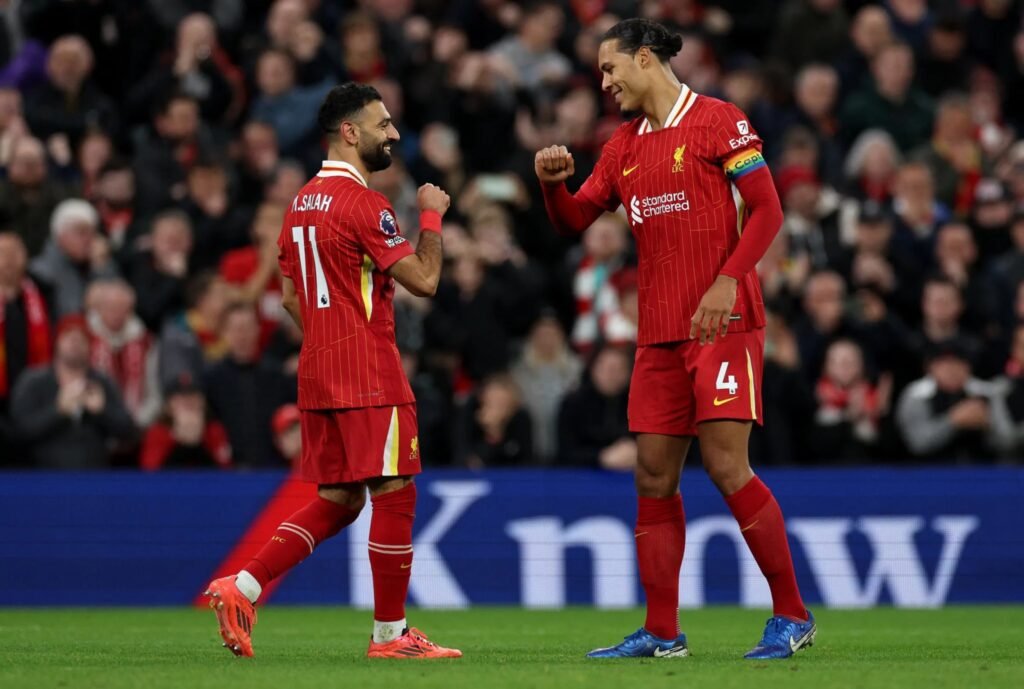
Salah was utterly relentless, shattering personal records with 32 goals and 23 assists across all competitions. He was, as the fan base now firmly believes, the difference between Liverpool and their competitors.
His goal contributions frequently came in matches decided by a single goal, the margins that separate champions from contenders.In crucial fixtures that eventually became decisive; away at Wolves, Arsenal, Southampton, and Newcastle United, as well as at home to Chelsea, Brighton, Aston Villa, and Manchester City, to name but a few.
Arne Slot’s tactical approach, which favoured intense possession and structured build-up, was ultimately underpinned by the knowledge that Salah’s individual brilliance could consistently break opposition lines, turning tight control into crucial victories.
He was able to get Liverpool over the line, claiming both the top scorer and best playmaker awards, and setting a new record for most Premier League games with goal and assist contributions, in a single campaign.
The Current Dip and Fractured Dynamics
Fast-forward to the current season, and the cycle of dependency has spun disastrously again. The same team that surged to the title now finds itself in disarray, languishing outside the top five after a series of uncharacteristic defeats.
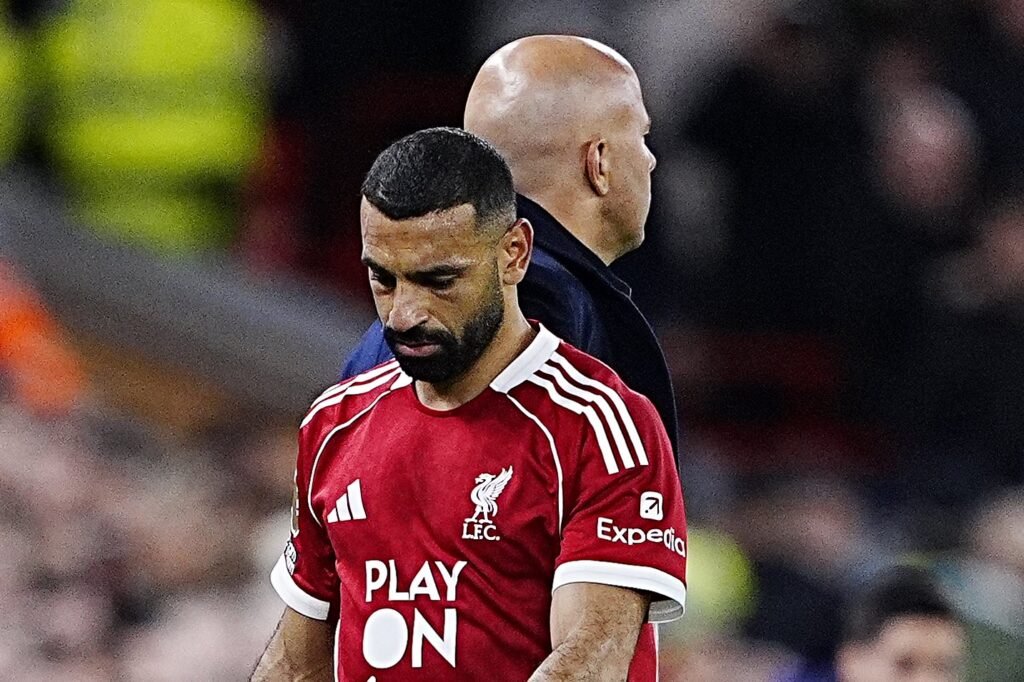
Salah’s form has demonstrably dipped, with just eight goal contributions in 19 games across all competitions, a significant dip compared to the title-winning campaign.
Crucially, the current slump is compounded by recent reports detailing a fractured relationship between Salah, Arne Slot, and the club’s hierarchy, which highlights that the reason the Egyptian has not started Liverpool’s three straight games was not really down to in-field performances.
Following a humiliating draw against Leeds United last weekend, Salah publicly expressed his frustration over being benched and alluded to broken promises, feeling that the club had ‘thrown him under the bus.’
This on-field drop-off, coupled with the highly publicised disciplinary rift, suggests that the mental and professional stability of the team is intrinsically tied to the contentment and peak performance of its biggest star.
This awkward situation forces confrontation of the ‘BIG question’: Is Liverpool worth anything without Mohamed Salah?
Historically, no elite club can truly be worth nothing without a star, but Liverpool’s recent form suggests their value is profoundly diminished.
While great teams are built on solid foundations, the superstars provide the margin of victory, and Salah has been the man for Liverpool for almost a decade. Arne Slot has him to thank for his Premier League title.
The current squad, designed for high-intensity pressing and quick transitions, seems unable to find consistent output from its other attacking assets, despite the millions of investment made in the summer.
Hugo Ekitike has been the only player to justify their big-money move, while the others, like Alexander Isak, Florian Wirtz, and Jeremy Frimpong, continue to struggle in the team.
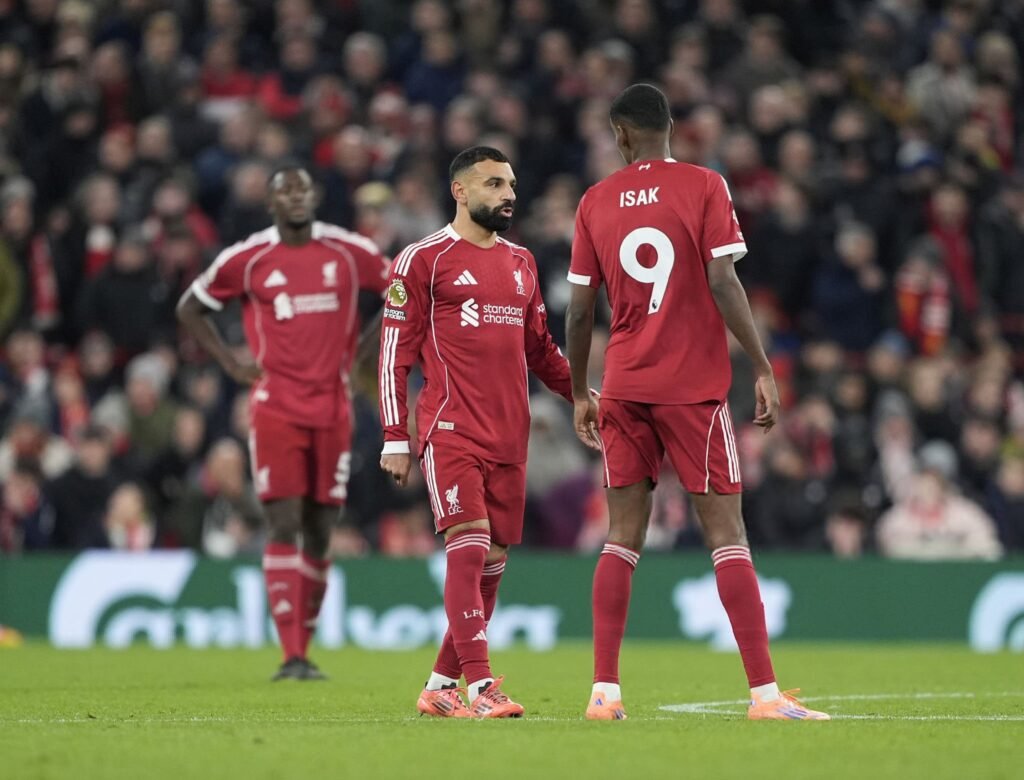
Liverpool’s competitions have not relied on only their attackers. Bar Manchester City, who had also previously struggled in matches where Erling Haaland had not turned up earlier, at clubs like Arsenal, Chelsea, and even outside the Premier League, players have all shared the responsibilities in attack.
But at Liverpool, it is the team that has completely fallen apart. The defense is the worst in the top European leagues across all competitions so far, boasting the most goals conceded.
Why Mohamed Salah felt singled out for the shortcomings suggests that there is more happening behind the scenes at the club that is not known to the public, and whatever that is, it isn’t looking good.
What now for Liverpool and Mo Salah?
The Egyptian is currently being coerced into tendering an apology and if he eventually does, the real story behind the fallout may never come to light.
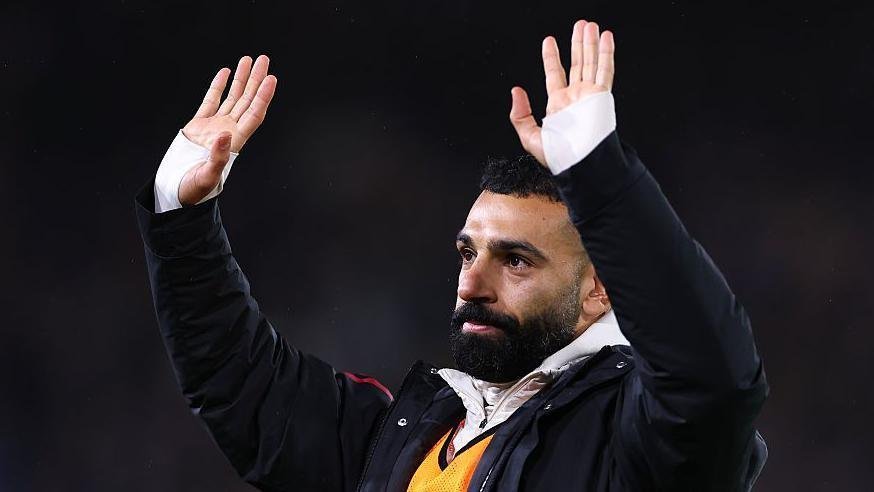
With the AFCON coming up this month, there is a possibility that Mohamed Salah has played his final game for Liverpool, which would be a waste should his time at the club come to an end in this way.
In the modern era, Mohamed Salah stands tall as the club’s best player. Not even their darling Steven Gerrard comes close to the level the Egyptian has delivered, and the titles he has brought them.
He has offers, especially from Saudi clubs, who have been on his case before he chose to continue at Liverpool by signing a contract extension a few months ago. Should he be available on the market, then, they are bound to come rushing in for his signature.
For the moment, especially after their Champions League win over Inter, the answer to whether Liverpool is worth anything without Mohamed Salah is: Yes, they are still a top-tier team.
However, their capacity to win major trophies is severely curtailed without their Egyptian King performing at an elite level; a fact that is already evident in their season so far.
Without Salah, Liverpool loses the decisive margin that turns title challenges into titles won, proving that sometimes, the difference between great and good teams lies squarely on the shoulders of one indispensable man; like Cristiano Ronaldo at peak Real Madrid, and Lionel Messi with Barcelona.
Kehinde-Hassan Afolabi
