
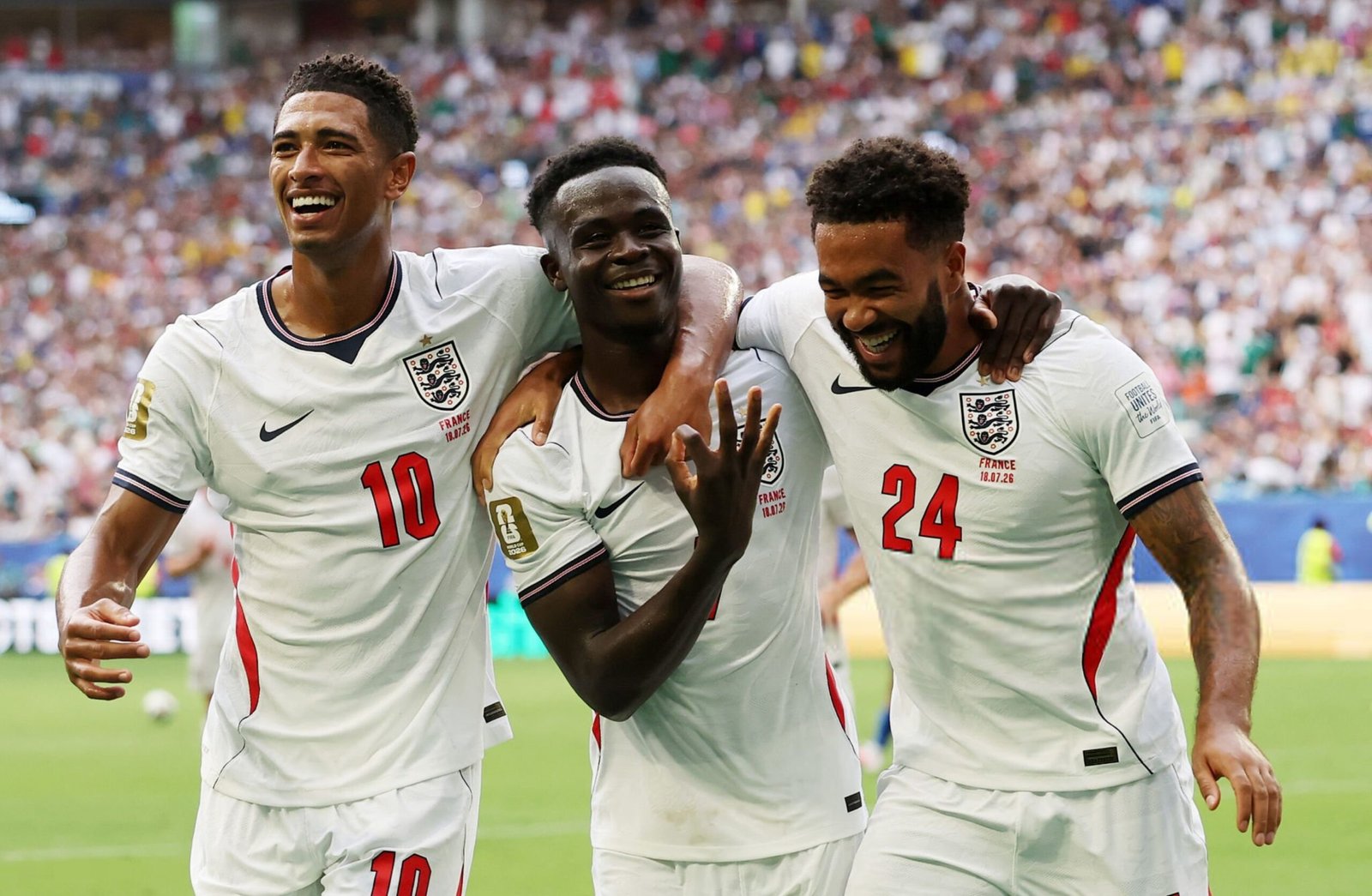
Bukayo Saka’s historic World Cup hat-trick not only secured England’s best-ever finish on foreign soil but also reignited the debate over Thomas Tuchel’s decision to leave him on the bench in the semi-final defeat to Argentina.
In England’s best ever World Cup finish on foreign soil, one player stood out, and player seized the occasion to create history that places him in the company of all-time Three Lions greats: his name is Bukayo Saka.
England secured their best FIFA World Cup finish since winning the championship on home soil in 1966 as they earned their first victory over France since 1982 to secure the bronze medal in a 10-goal thriller that ended 6-4.
How the 2026 World Cup Bronze final went in Miami
Both sides, disappointed after their semi-final exits, started the game in two distinct moods with England showing more zeal, and took the deserved lead less than three minutes in, before assisting Ezri Konsa from a corner kick for 2-0 inside the opening 20 minutes.
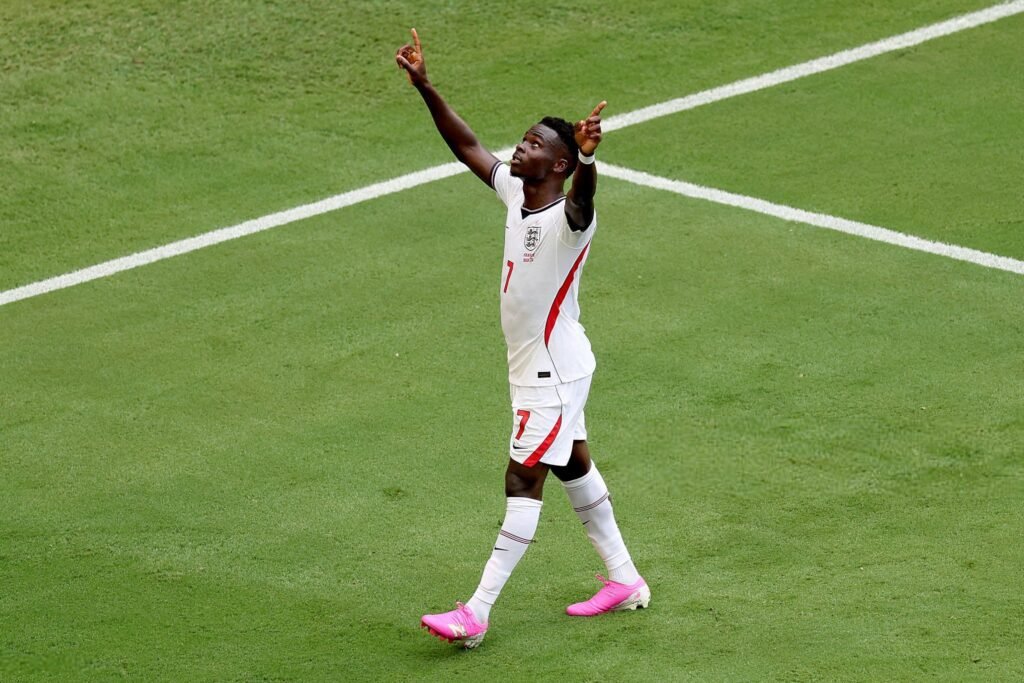
Bukayo Saka then stepped up with a first-half brace, after he has had a goal ruled out for offside to take the game beyond the 2018 winners, with his second coming from an assist from Arsenal teammate, Eberechi Eze.
France turned the game into a tale of two halves after the interval, with Kylian Mbappé inspiring a comeback with two goals and one assist between them to set up Bradley Barcola and make it 4-3, just one goal from what would have been the greatest comeback in World Cup history.
Michael Olise, who assisted the two Mbappé goals also seized the opportunity to make history, breaking Pelé’s record for most assists in a single World Cup edition with seven. The Frenchman will now have his eyes on the record in further editions.
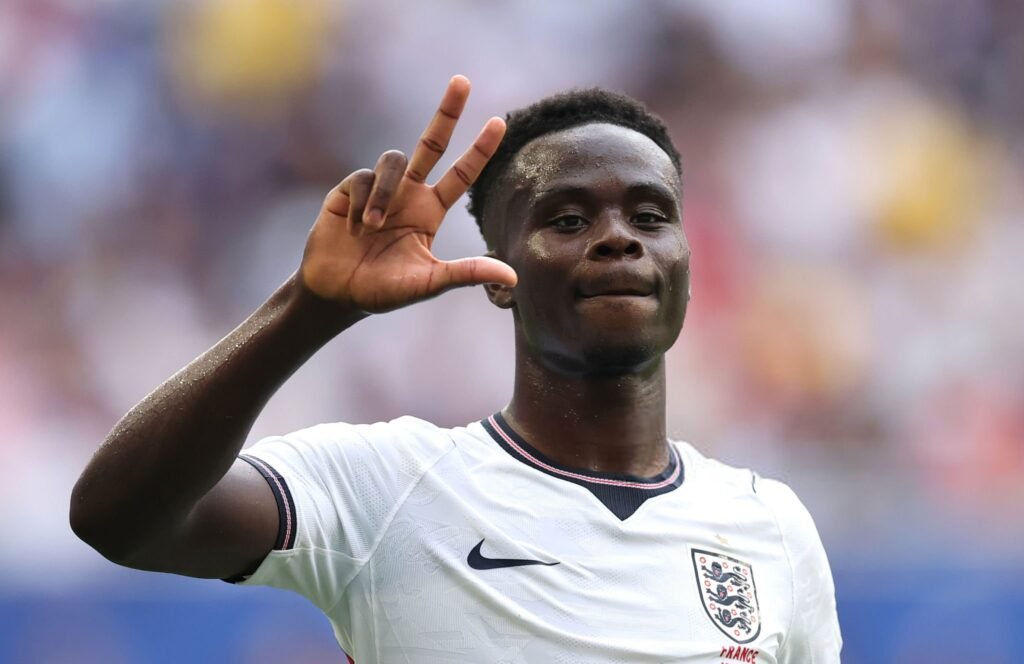
Bukayo Saka converted a penalty to complete his hat-trick and ease fears of the French comeback, but Ousmane Dembele scored soon after to keep the difference at one-goal, before a brilliant solo goal from substitute Jude Bellingham secured the win in added time.
Bukayo Saka: Emergence of an English legend
Bukayo Saka was always one of the stars of the England Nation Team and despite injuries limiting his involvement in the tournament, he always turned up when called upon, maximizing the scraps.
His performances made it baffling that Three Lions boss Thomas Tuchel didn’t call upon him for the semi-final defeat to Argentina, a game that was at some point begging for the Arsenal man.
Even though the German made the excuse that he was managing his minutes, Bukayo Saka later clarified that he was fit, even for the semi-final loss, but the manager chose to repay Morgan Rogers for his good performances.
For an experienced coach, English fans will forever find it unforgivable that Tuchel fell for the trick and left Bukayo Saka on the bench as they watched their team surrender a priceless advantage late on to the South Americans.
However, the 24-year-old ultimately got his chance to impress English fans in the bronze medal match with a man of the match performance accompanied by a rare hat-trick, which will not easily fade from memory.
A Historic Company
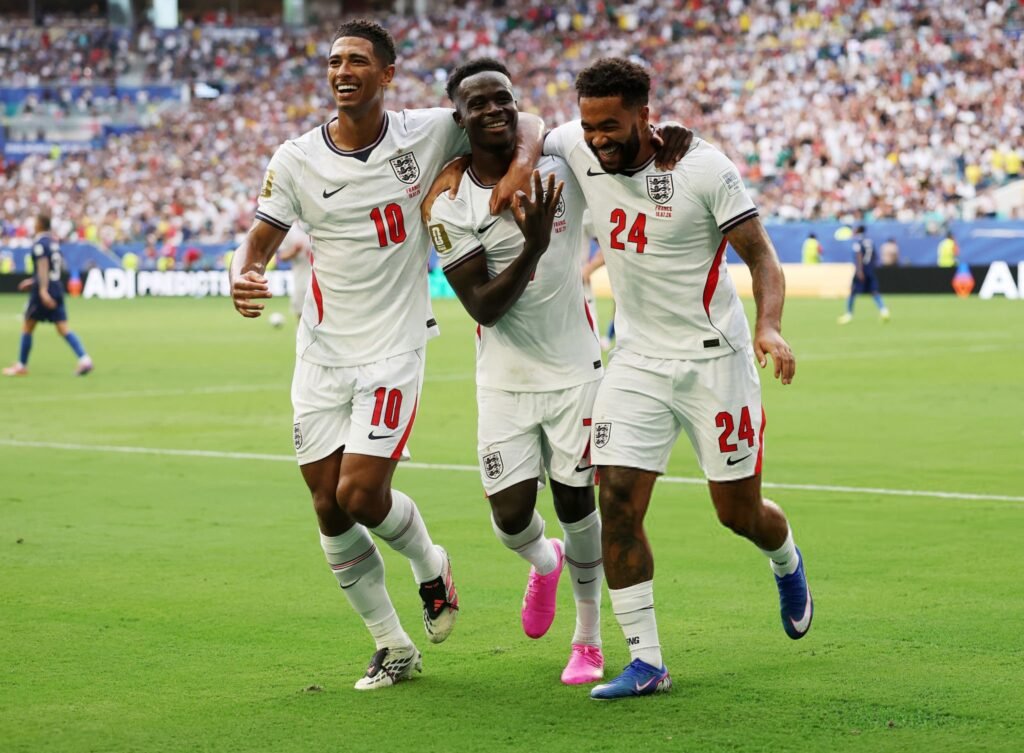
Bukayo Saka’s hat-trick puts him in rare and storied company. The Arsenal winger becomes only the second England player to do so in a FIFA World Cup knockout stage match, joining Sir Geoff Hurst, whose own treble in the 1966 final remains the most iconic in the tournament’s history.
Fifty-eight years on, Saka has etched his name alongside it, in a game that, while not a final, carried its own weight as England’s best finish on foreign soil.
Climbing the All-Time Charts
The hat-trick also lifts Saka into the top four of England’s all-time World Cup goalscorers, trailing only Harry Kane 14, Gary Lineker 10, and Jude Bellingham, eight.
For a player who arrived at this tournament with question marks over his fitness and minutes, it’s a startling leap up a list built by some of the country’s greatest players, and, at 24, Saka is far from finished adding to his tally.
Matching and surpassing the Greats
His three goals against France didn’t just add to his personal record, they rewrote where he sits among England legends, as it means he equalled and Steven Gerrard and David Beckham’s World Cup goal tally on that night alone.
The hat-trick also beat Raheem Sterling’s World Cup goal count of two for the Three Lions, closing another chapter on the current generation’s pecking order.
Joining the 21st Century’s Elite Club
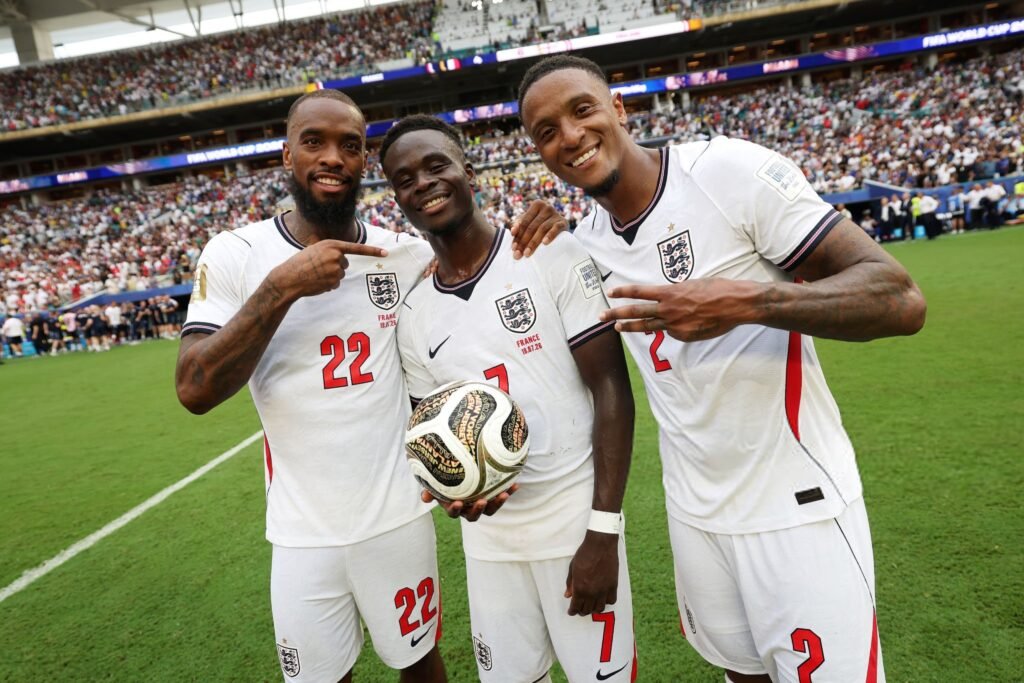
The hat-trick isn’t just rare in an England shirt, it’s rare in the modern game, full stop. He becomes only the third player this century to score a hat-trick in a FIFA World Cup knockout match, joining Kylian Mbappé against Argentina in the 2022 final, and Gonçalo Ramos against Switzerland that same year.
Both of those hat-tricks came in the same tournament cycle, making Saka’s the first and final of its kind in 2026, and placing the Arsenal forward in company that, until this point, belonged exclusively to those two.
A Season’s Worth of Impact in One Night
Perhaps the most striking marker of all is that with the hat-trick alone, Bukayo Saka alone matches Cole Palmer’s entire goal contribution tally for England, and equals Phil Foden’s combined goal involvement across major tournaments for the Three Lions.
What took his contemporaries entire tournaments, or in Palmer’s case an entire international career so far, Saka produced in a single night in Miami, a night that may end up defining how this generation of England players is remembered.
The Question That Will Forever Linger
For all the celebration of Saka’s bronze medal heroics, England fans will find it hard to fully let go of what might have been, and for sure the question hangs heavy on their manager Thomas Tuchel.
Why was Bukayo Saka involved vs. Argentina?
Bukayo Saka’s own admission that he was fit and available only deepens the frustration, and no explanation about managing minutes has done enough to quiet the doubts.
Tuchel’s decision to stick with Morgan Rogers, as a reward for previous performances, will go down as one of the most scrutinised calls of his reign as England’s Three Lions manager.
Fans watched a golden opportunity slip away against South American opposition, and no amount of bronze medal brilliance can fully soften that memory. Some misjudgements fade with time. This one, many suspect, never will.
Kehinde-Hassan Afolabi
