
Tiki-Taka to Tears | Are there more embarrassing clubs than those in LaLiga?
The culture of Spanish football is currently undergoing a crisis of identity, one where their beautiful tiki-taka reputation has been replaced by a relentless cycle of institutional whining.
While the La Liga remains one of the gold standards of technical excellence, its modern era is increasingly defined by its clubs’ pathological need to blame external factors for their own shortcomings.
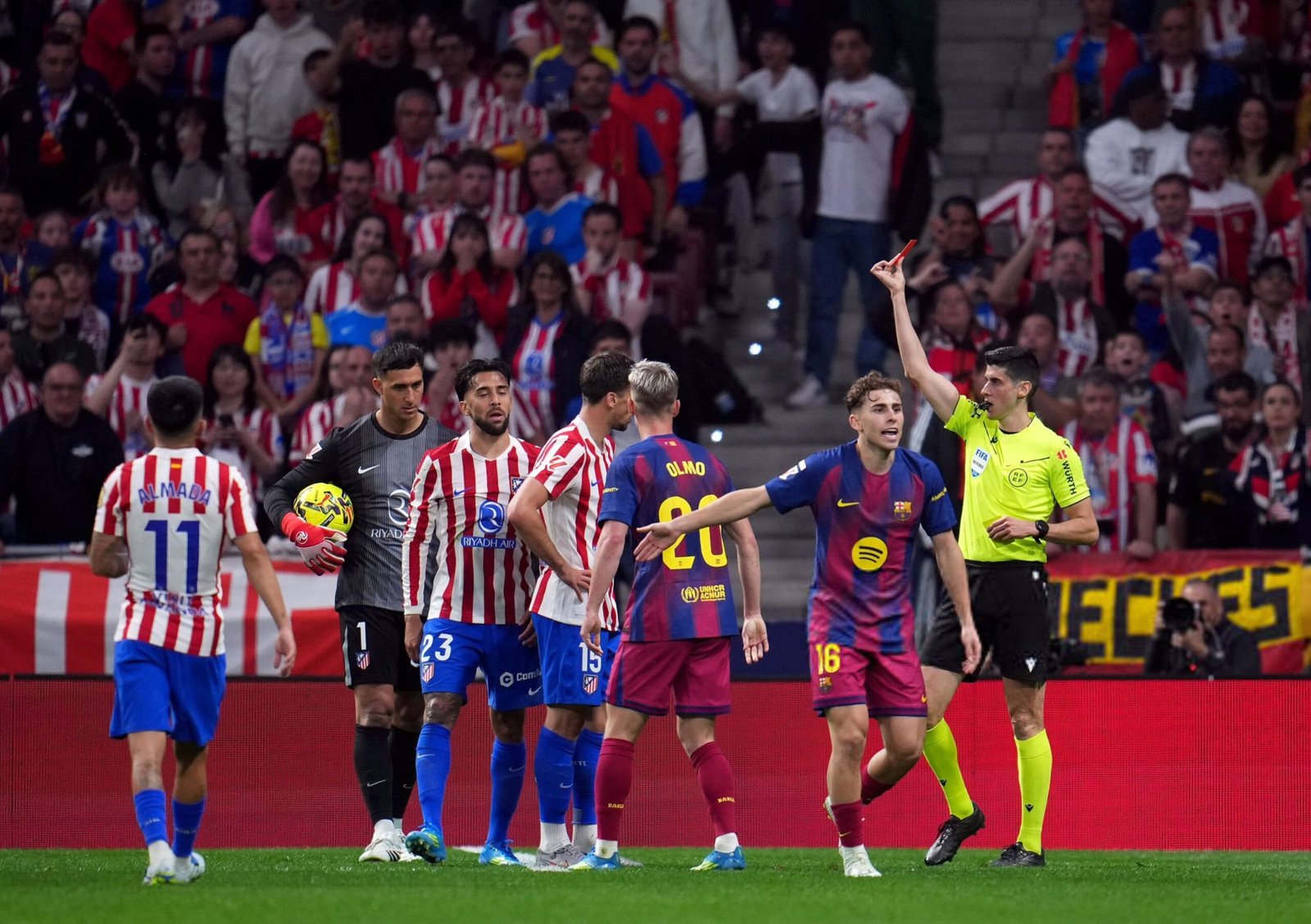
After Barcelona’s Champions League quarter-final elimination at the hands of fellow Spanish team Atlético Madrid, the Catalan giants lodged a complaint to UEFA about the officiating Wanda Metropolitano, adding to their earlier ones from the first-leg.
The Catalan giants had filed complaint about the officiating in the first leg in Camp Nou, which centered around an improper restart between goalkeeper Musso and defender Marc Pubil, a case that has recently been dismissed as inadmissible and about the length of the grass at the Metropolitano ahead of kick-off of the second leg.
Real Madrid also had another episode of their own the following day on Wednesday, after a failed comeback bid against Bayern Munich, influenced by a late and controversial red card to Eduardo Camavinga.
As they are known to always do in domestic competitions, Barcelona, Real Madrid, and their LaLiga counterparts have become very consistent in claiming victimhood, and they couldn’t appear any more more pathetic on the big stage.
La Liga: Tiki-Taka to Tears
The air in Spain is thick with the scent of litigation and paranoia. La Liga has transitioned from a football league into a permanent grievance committee.
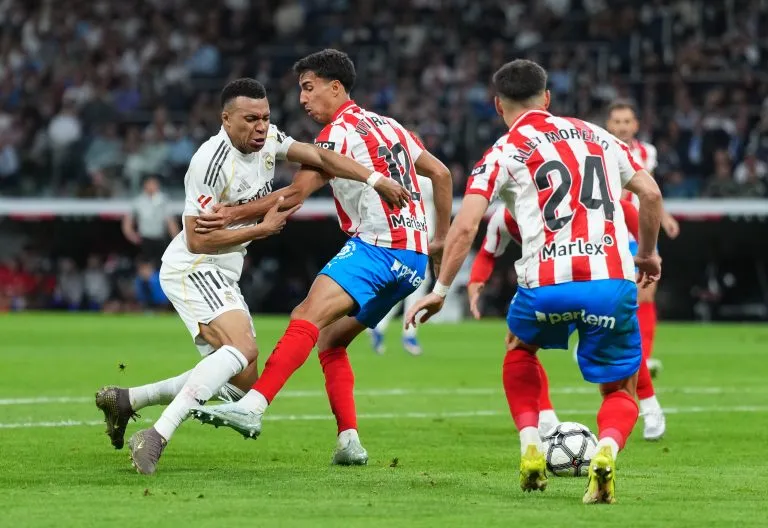
Already this season, the friction reached a fever pitch when Real Madrid officially cut ties with the Spanish Football Federation (RFEF), citing a rigged refereeing system following a denied penalty for Kylian Mbappé against Girona.
The club’s boycott essentially declares the entire domestic competition adulterated, as they feel they have been made victims by the CTA, who, even though they admitted the error, have handed the culprit Alberola Rojas the Copa del Rey final this Saturday.
However, this isn’t a one-club phenomenon. Whether it is Javier Tebas clashing with Hansi Flick over fixture congestion or various managers lamenting the dryness of the pitch after a poor result, the excuse-first mentality has become a cultural staple in Spain.
Taking the Sob Story to Europe
Perhaps more embarrassing is how these domestic habits are now being exported to the continental stage. In the wake of their 2026 Champions League quarter-final first-leg defeat to Atlético Madrid, Barcelona took the extraordinary step of filing a formal complaint with UEFA.
Instead of owning up to being outsmarted in a 2-0 defeat, the club’s leadership has focused on a tiny technicality, as their formal complaint to UEFA revolves around a minor handball by Marc Pubill, which they claim led to an improper restart.
Their obsession over exactly how the ball was put back in play labels them as a team looking for a loophole rather than a solution, trying to turn a football match into a courtroom trial.
It is a weak move for a club of their size and suggests that they believe a missed procedural detail is more responsible for a 2-0 defeat in their own background than their actual performance on the pitch.
When you are two goals down in a quarter-final and your first reaction is to complain about how a free-kick was taken, you’ve essentially admitted that you can’t win through merit anymore.
This entitlement, the idea that a loss must be the result of a conspiracy rather than a superior opponent, is a classic La Liga export, and this beyond pathetic, even for a club that has continuously fallen short at this stage for almost a decade.
However, this pathetic trend isn’t new for the Blaugrana, it is but a recurring nightmare. History repeated itself this April, mirroring the events of the 2016 Champions League quarter-finals, where these same two sides met.
After being knocked out by Atlético, the Barcelona camp spent weeks fuming over a late penalty that wasn’t awarded for a Gabi handball, alongside complaints about the hostile environment and the length of the grass at the Vicente Calderón.
A decade later, the script remains identical. Ahead of the second leg in Madrid, the Catalan side has already begun preemptive grumbling about the state of the pitch, reviving the gardener memes that have haunted former midfielder Xavi.
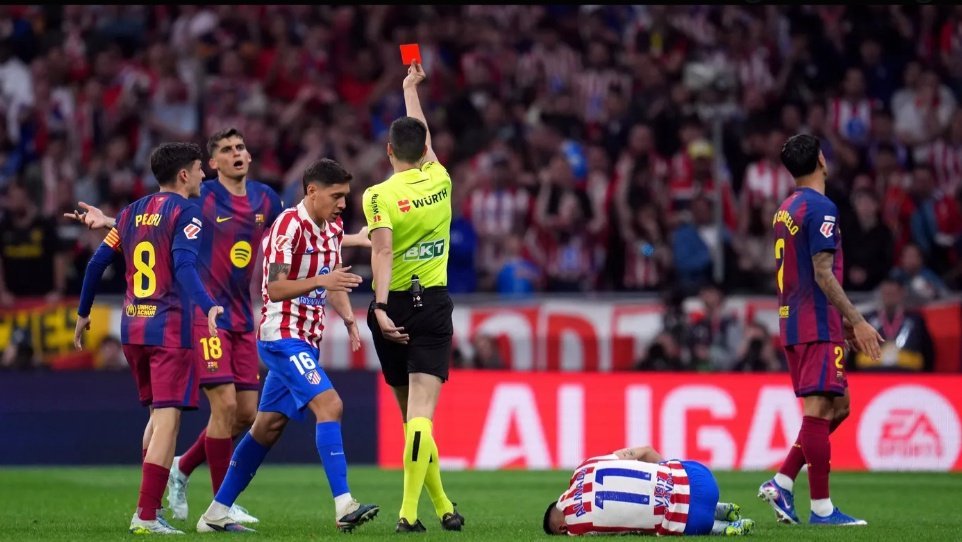
After winning the match 2-1 but lost 3-2 on aggregate, Barcelona, again, filed new complaints about the officiating, as Eric Garcia was sent off for a last man tackle on Alexander Sorloth in the final 15 minutes of normal time.
The following day, Real Madrid players turned the Allianz Arena into an exhibition of their victimhood following the full-time whistle as Bayern Munich progressed into the semi-finals of the Champions League in a 6-4 aggregate win.
Instead of Los Blancos players to own up to the silly error from Camavinga that costed them the match, they took their grievances out on the match officials, leading to suspensions of some players for the early rounds of games in the competition next season.
A League of Excuses
The list of pathetic grievances is exhaustive. From referee obsession to Twitter trends and now receiving the grass detail controversy, La Liga clubs know no limit to how low they can stoop when things don’t go their way.
One of the most damning episodes came recently, when Atlético Madrid pivoted to a strategy of social media mobilization to mask on-pitch failures in the wake of recent losses to Real Madrid and Barcelona in the league.
By posting frame-by-frame screenshots of subjective refereeing decisions, specifically focusing on unpunished challenges by Real Madrid players and VAR inconsistencies in the Barcelona game, the club successfully manufactured a trending topic.
Ultimately, the continuous complaints at the blow of a whistle, La Liga’s heavyweights are eroding their own prestige, and are at a very fast pace losing the respect of the football world it commands as one of the biggest in Europe.
By taking these domestic tantrums to the Champions League, complaining about the pitch in 2016 and again in 2026, the clubs are signaling to the world that they no longer believe in winning through merit.
In the eyes of the football world, La Liga is no longer the home of the Tiki-Taka maestros but a league of elite crybabies and sore losers, who would rather win a trending hashtag than a fair game of football.
This constant deflection has become the most embarrassing trait of modern Spanish football, and the RFEF is better curing this malady at home before it spreads over their reputation outside of domestic competitions.
Kehinde-Hassan Afolabi
