

Tapping Up: Transfer deals do not always begin with an official bid. In many cases, the groundwork can start quietly through conversations between players, agents, managers or people connected to interested clubs.
When a club attempts to influence a player who is still under contract elsewhere without following the proper channels, it can enter the controversial territory of tapping up. The practice has exist in football for decades, but the huge financial value of modern transfers has made it an increasingly sensitive issue.
While some approaches are innocent or difficult to prove, others can unsettle players, damage relationships between clubs and potentially lead to disciplinary action.
What is Tapping Up?
Tapping up is the unofficial term for an unauthorised approach to a contracted player with the intention of encouraging a transfer. It does not necessarily have to come from a club president or manager. It can happen through an agent, intermediary, former teammate, family member or another person acting for the interested club.
Consider a simple scenario. Real Madrid want a midfielder contracted to Bayern Munich. Rather than immediately contacting Bayern, someone connected to Madrid asks the player’s agent whether he would be interested in moving to Spain, what salary he expects and whether he would sign a long-term deal.
If those discussions are intended to lay the foundations for a transfer without the permission of the Bavarians, the situation can be termed as tapping-up.
The problem is that footballers have relationships outside their clubs. An international teammate can recommend a club, a manager can praise a player publicly and an agent can discuss career options. Not every conversation is illegal or a breach of regulations.
However, the important questions are who initiated the contact, why it happened and whether it was designed to advance a transfer.
The Regulatory Framework: FIFA and National Rules
Tapping up is governed through a mixture of FIFA regulations, national association rules and league regulations.
FIFA’s Regulations on the Status and Transfer of Players form part of the global framework, while national bodies and leagues can impose additional rules. FIFA’s legal framework also covers football agents and contractual stability.
In England, Premier League rules have traditionally required a club to obtain permission before approaching a contracted player. But the wider principle is not uniquely English. FIFA’s framework recognises contractual stability and regulates the circumstances in which players, clubs and agents can negotiate.
There are also important exceptions. A player approaching the final months of a contract may have greater freedom to negotiate a future move, depending on the applicable rules.
This is why the January window can be particularly complicated since a player whose contract expires in the summer may legally be able to negotiate with another club while someone attempting the same approach much earlier could face a different regulatory position.
High-Profile Case Studies Around Europe
Ashley Cole and Chelsea
The 2005 Ashley Cole affair remains one of the clearest examples of tapping up. Cole, then at Arsenal, met Chelsea manager José Mourinho and club officials without Arsenal’s permission, to discuss a move to their London rivals.

Chelsea were fined £300,000, while Cole and Mourinho were also punished. In addition, Agent Jonathan Barnett was fined and had his licence suspended. The case became a warning to clubs that private meetings could have consequences when they involve a player under contract.
Liverpool and Virgil van Dijk
Liverpool’s pursuit of Virgil van Dijk in 2017 showed how quickly a transfer chase can become uncomfortable. Southampton complained about the Red’s interest in their player, prompting Liverpool to publicly apologise and withdraw from the pursuit.
No comparable punishment followed and Van Dijk ultimately joined Liverpool six months later, but the episode demonstrated how allegations can derail negotiations even before a transfer is completed.
Barcelona, Cesc Fàbregas and Luis Suárez
Barcelona have also faced accusations surrounding approaches to players contracted elsewhere.
During the long-running Cesc Fàbregas saga, Barcelona figures publicly discussed the midfielder’s desire to return to Catalonia while he remained an Arsenal player. Former Barcelona captain Xavi also spoke openly about conversations with Fàbregas.
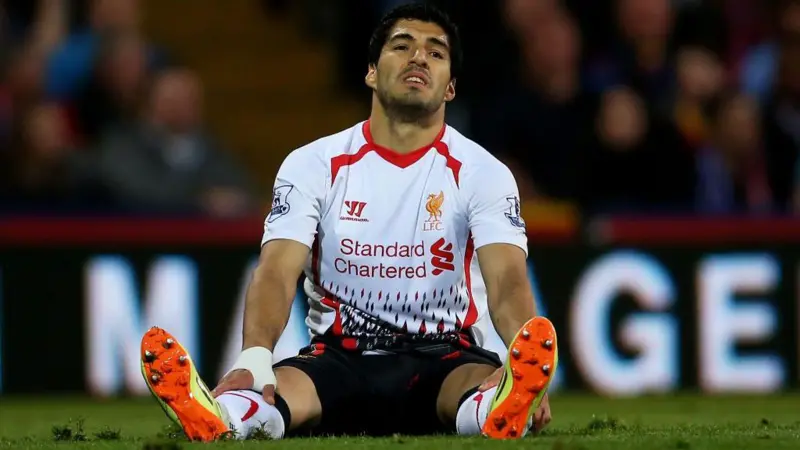
Luis Suárez’s 2014 move from Liverpool to Barcelona provides another interesting example. Barcelona president Josep Maria Bartomeu later described contact surrounding the striker before the World Cup, highlighting how conversations can take place well before the official transfer is announced.

In 2026, Barcelona have also been accused by fellow Spanish giants Atlético Madrid for tapping up their Argentine attacker Julian Alvarez, who currently has his heart set on a move to Camp Nou, even though he has four years left on his contract.
Chelsea and Gaël Kakuta
The issue is even more serious when young players are involved. Chelsea were sanctioned by FIFA in 2009 following the dispute over French youngster Gaël Kakuta’s move from Lens.
FIFA initially imposed a transfer ban and ordered compensation, although the Court of Arbitration for Sport later overturned the sanctions after finding that Kakuta’s contract with Lens was not valid.
The case remains useful because it shows how complicated tapping-up disputes can become when questions about a player’s contract itself enter the argument.
Roma and Philippe Mexès
Italy has also had its own major cases. Roma were sanctioned over their recruitment of French defender Philippe Mexès from Auxerre, another example of how an alleged improper approach can develop into a dispute between clubs and football authorities.
The Impact on Player Focus and Club Harmony
Tapping up can damage a club even when no official charge follows. Imagine Bayern’s dressing room discovering that one of its biggest stars has been discussing a move to Barcelona. The player may still perform professionally, but questions immediately arise over his commitment.
The manager may wonder whether to build the next season around him. Fans may become hostile. Teammates may question whether the player is fully invested. Contract negotiations can also become more difficult because the player suddenly has another club in the background.

An example is Alexander Isak’s saga involving Newcastle United and Liverpool in the 2025 summer transfer window. The incident divided the Magpies dressing room and Isak went AWOL before an agreement was eventually reached between the two clubs for his transfer.
For young players, the effect can be even greater. A teenager told that Manchester City, Paris Saint-Germain or Real Madrid wants him may begin looking beyond his current academy before even establishing himself.
Sanctions and Consequences
Punishment depends on the rules breached and the strength of the evidence. Clubs, players and agents can face fines, while more serious cases can result in restrictions on recruitment or registration.
The Ashley Cole case demonstrated that sporting sanctions can accompany financial penalties. Chelsea were given a suspended three-point deduction in addition to their fine.
The Kakuta case also showed that FIFA can impose transfer restrictions in cases involving alleged inducement of a player to breach contractual obligations, although that particular punishment was later overturned by CAS.
For clubs, another consequence that cannot be measured in money is reputation. A club repeatedly accused of bypassing competitors can find future negotiations more difficult.
Tapping Up When a Player Has a Release Clause
A release clause does not automatically make tapping up legal. In leagues such as LaLiga, where release clauses are common, a buying club may have a contractual route to acquire a player without negotiating a transfer fee with his club.
However, that does not necessarily give it permission to improperly influence the player beforehand the important decisions between a player their current club.
For example, if a player has a €100 million clause, another club can potentially pay the required amount and trigger the contractual mechanism, but secretly instructing the player’s representatives to pressure him to reject his current club, refuse a renewal or force an exit could raise separate regulatory or contractual issues.
FIFA’s transfer regulations protect contractual stability, while LaLiga operates under its own regulations alongside RFEF and FIFA rules.
The Grey Areas: Agents and Indirect Approaches
This is probably the hardest part of the issue to police. A club can claim it never contacted a player, while the player’s agent insists that discussions were initiated independently.
Imagine a Premier League club wanting a Napoli winger. The English club does not call Napoli. Instead, an intermediary contacts the player’s agent, discusses wages and asks whether the player would be interested. The agent then tells the player about the opportunity.

Who tapped him up?
That is where evidence becomes crucial. FIFA’s agent regulations have made the role of licensed agents and formal representation increasingly important, but the reality of football remains full of informal relationships.
Public Comments Can Also Create Pressure
Not every approach happens in private. Managers and players sometimes make public comments that appear harmless but can increase pressure on a contracted footballer.
A typical example is the ongoing exchange between Barcelona and Atlético Madrid, where Joan Laporta said they remain in Julian Alvarez and would want Atleti to accept their offer, even though Los Colchoneros have continuously maintained they do nit intend to sell.
Although his comments may not amount to a regulatory breach by itself. But the repeated public lobbying can, and has influenced the player, his entourage, and fans.
This is particularly common when a transfer rumour dominates the media. The interested club can create an atmosphere in which the player begins to feel that moving is the natural next step.
Social Media Has Changed the Game
Social media has made the boundary even harder to police. Players interact with rivals, former teammates and international colleagues every day. A like, comment or message can be innocent, but it can also become part of a wider pattern if a transfer follows.
That makes modern tapping up less about one dramatic meeting and more about a chain of small interactions.
Why Tapping Up Still Survives?
The uncomfortable reality is that tapping up remains difficult to eliminate because football is built around relationships. Players know agents, managers know players, teammates move clubs and executives speak regularly. Completely separating those relationships from transfer business is almost impossible.
What has changed is the speed and value of the modern transfer market. A conversation that once remained private can now become a headline within minutes, pushing a player, club and agent into a public dispute.
Ultimately, the safest route to containing tapping up in football is respect existing contracts, use authorised representatives and approach the player’s club through the proper channels, but these are easily bypassed if intended.
Football may never completely eliminate tapping up, but clearer rules, stronger evidence and consistent enforcement can make it far harder for hidden negotiations to undermine contracts that are still legally in force.
Kehinde-Hassan Afolabi