
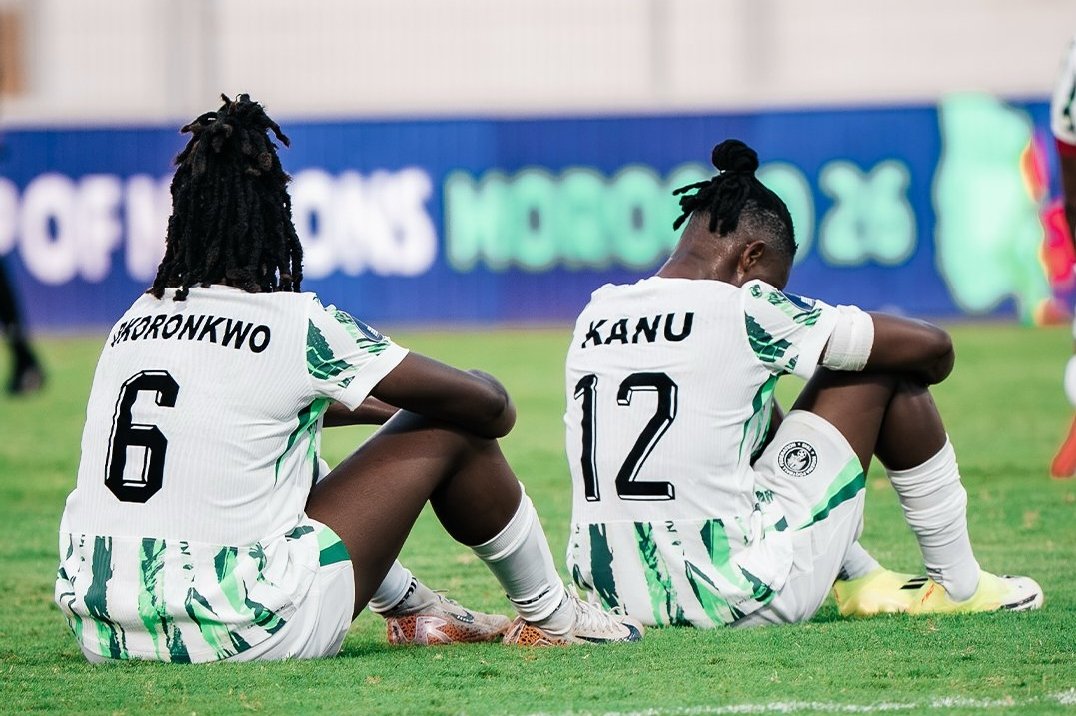
For decades, Nigerian football had one reliable constant: when everything else failed, the Super Falcons delivered.
They were the women’s game’s biggest force, the team every emerging challenger had to overcome before dreaming of continental supremacy. That advantage is no longer guaranteed.
Nigeria’s quarter-final exit at the 2026 Women’s Africa Cup of Nations, following a 1-0 defeat by Cameroon, should therefore be viewed as more than an isolated tournament disappointment. It is another warning that the gap Nigeria once enjoyed over the rest of Africa has narrowed considerably.
And this time, there is little room to hide behind the comfort of past achievements.
The Falcons Are No Longer Untouchable
Nigeria entered the 2026 WAFCON as defending champions after winning the 2025 tournament, where they defeated Morocco 3-2 in the final. They had also reached the semi-final of the previous edition, losing to Morocco on penalties in 2022.
That recent record still reflects an elite team. But it also tells another story.
The Falcons‘ continental dominance has become harder to sustain. South Africa, Morocco, Zambia, Ghana, Cameroon and Côte d’Ivoire have all invested heavily in their women’s programmes, while countries that once approached Nigeria with caution now believe they can beat them.
The 2026 tournament has made that shift impossible to ignore.
Cameroon eliminated Nigeria in the quarter-finals, while Malawi reached the semi-finals during their debut campaign and secured their first-ever Women’s World Cup qualification. Algeria also reached the last four for the first time.
The continent no longer linger behind the Super Falcons of Nigeria anymore. It is catching up.
The Warning Signs Were Already There
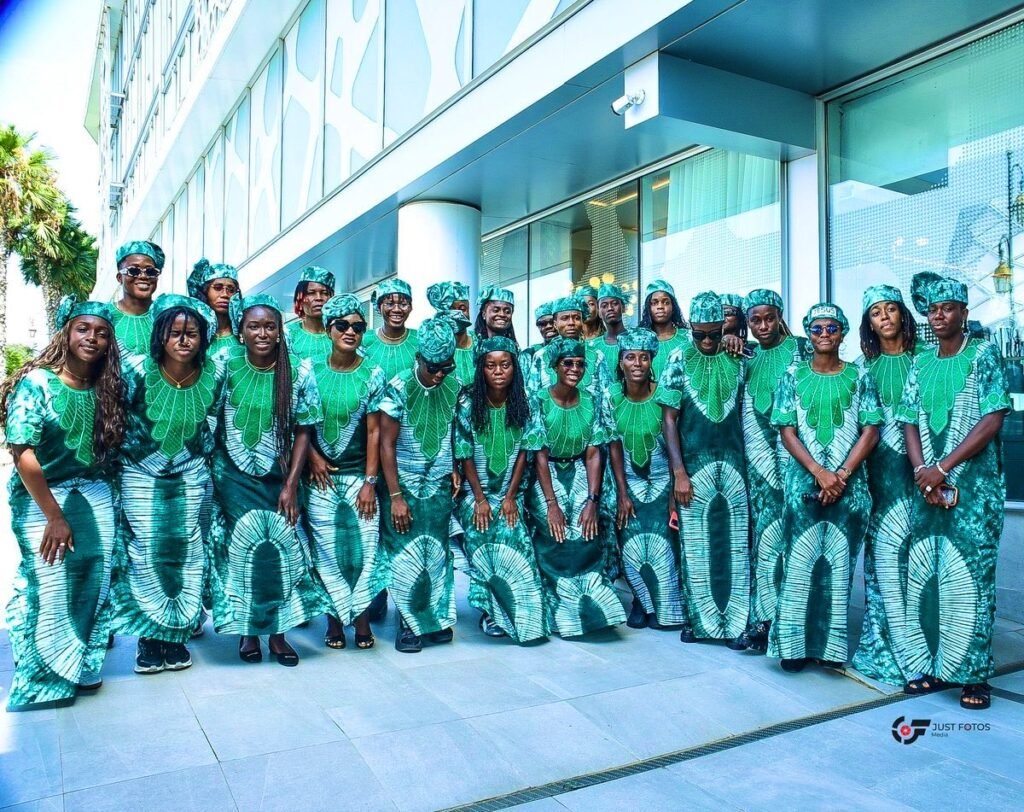
The problem is that Nigeria’s latest disappointment should not have come as a shock.
The Falcons had remained successful enough to make criticism uncomfortable. Winning the 2025 WAFCON allowed weaknesses to be dismissed because, ultimately, champions are judged by trophies. But success can sometimes conceal structural problems.
Nigeria’s women’s football has produced outstanding individuals for generations, from Perpetua Nkwocha and Mercy Akide to Asisat Oshoala, Rasheedat Ajibade and Chiamaka Nnadozie. Yet producing exceptional players is not the same as maintaining an exceptional football system.
The rest of Africa has increasingly understood that distinction. South Africa’s rise has been backed by sustained investment and professionalisation. Morocco have rapidly developed their women’s infrastructure and become a serious continental power. Zambia have emerged as another dangerous opponent.
While the other countries are building a system to challenge their dominance, Nigeria continue relying on reputation to compensate for what is missing underneath.
The Bigger Nigerian Football Problem
The Super Falcons’ decline cannot be separated entirely from the wider condition of Nigerian football.
The Super Eagles have now missed two consecutive World Cups for the first time since Nigeria’s World Cup debut in 1994. They failed to reach Qatar 2022 and then lost to DR Congo on penalties in the 2026 qualifying play-off.
That is particularly painful because Nigeria’s 2026 failure came in an expanded tournament in which Africa had ten places available.
The men’s senior team is therefore no longer an automatic presence on football’s biggest stage.
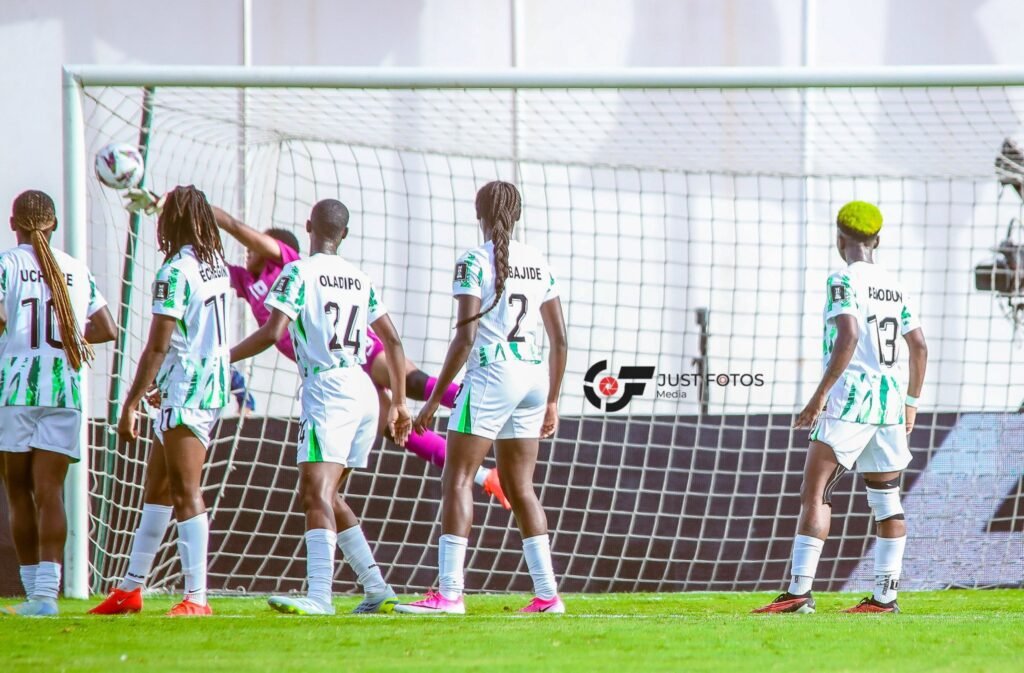
The youth teams have also lost some of the consistency that once defined them. Nigeria remains the record winner of the FIFA U-17 World Cup, with five titles, but the Golden Eaglets failed to qualify for four of the last five editions.
That should worry everyone. Youth football is supposed to be the foundation of the senior national teams, and as that foundation weakens, the consequences eventually reach the top.
Nigeria Still Has the Talent
This is perhaps the most frustrating part. Nigeria has not suddenly stopped producing footballers. Walk through football fields and academy grounds across the country and the talent is still obvious.
Young players continue to dream of professional careers, while parents increasingly see football as a potential pathway rather than merely a hobby.
Private academies have multiplied, and new initiatives are emerging. The NFF launched the FIFA Talent Development Scheme for Girls in December 2025, aimed at identifying and developing young female players.
There are also newer attempts to connect grassroots football with scouting and structured competition, including the Nigeria Football Academies Championship, whose inaugural Super League began in 2026.
So the problem is not an absence of talent. It is what happens to that talent afterwards.
Nigeria has spent decades proving that it can discover gifted footballers. The bigger challenge now is building a system capable of turning those players into elite professionals and cohesive national teams.
The Golden Generation Became a Standard
There was a period when Nigerian football seemed to operate on another level.
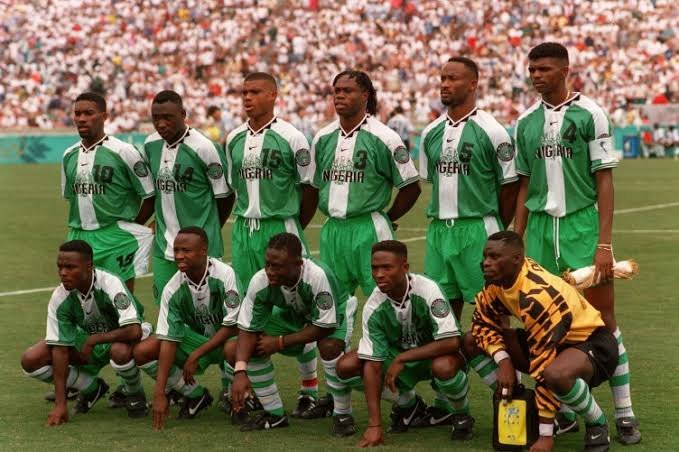
The 1990s and early 2000s produced a generation that transformed the country’s football identity. Nigeria won the 1994 AFCON, reached the 1994 and 1998 World Cup knockout stages and won Olympic gold in Atlanta in 1996.
The Golden Eaglets became the most successful team in FIFA U-17 World Cup history. Then came the players.
Kanu Nwankwo starred for Ajax and Arsenal. Finidi George played for Ajax and Real Betis. Daniel Amokachi made his name in England, while Sunday Oliseh and Taribo West established themselves in Europe’s major leagues.
And then there was Austin Okocha.
The football was not merely successful; it was recognisable. Nigeria produced players with personalities, technical quality and the confidence to perform at the highest level.
That generation became the standard against which everything that followed was judged. But as it turned out, nostalgia cannot build the next generation.
Africa Changed While Nigeria Stood Still
Perhaps the biggest mistake has been assuming that Nigeria’s historical advantage would remain permanent, and that it was never going to. African football has become more organised, more professional and more competitive.
Countries have invested in women’s leagues, academies, coaching, facilities, sports science and player development. The result is visible in the growing number of African players competing at the highest levels.
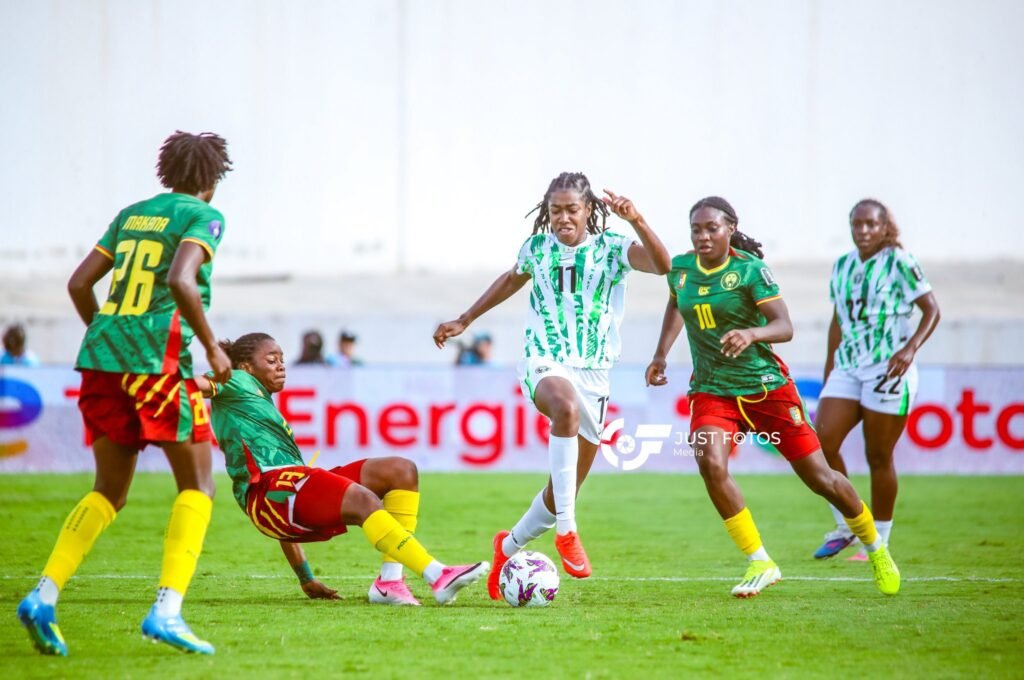
Nigeria’s old advantage, having more talent than everyone else, is no longer enough. The gap between Nigeria and its neighbours has become smaller, while the tactical gap has sometimes disappeared altogether.
The Super Falcons discovered that painfully against Cameroon. Nigeria had the experience. Cameroon had the belief. And in knockout football, belief can be decisive. After letting that lone goal in, Indomitable Lionesses stood still and repelled everything thrown at them.
The NFF Must Look Beyond the Next Tournament
The temptation now will be to focus on replacing a coach, changing a few players or preparing for the next FIFA World Cup if they overcome South Africa. But that would miss the point.
Nigeria needs a longer-term football strategy. The NFF must strengthen youth development, improve the domestic women’s league, create better pathways between academies and professional clubs, invest in coaching education and ensure national teams have continuity rather than repeatedly rebuilding around tournament cycles.
Many of the new challengers stage their fight on younger players. Like N’Sira Safi Ouedraogo of Ivory Coast and others. The Falcons need a proper succession plan too.
Nigeria cannot wait until another generation of stars begins to decline before searching for their replacements. The talent must be integrated early, tested against strong opposition and developed within a clear footballing philosophy.
The Super Falcons Can Still Recover
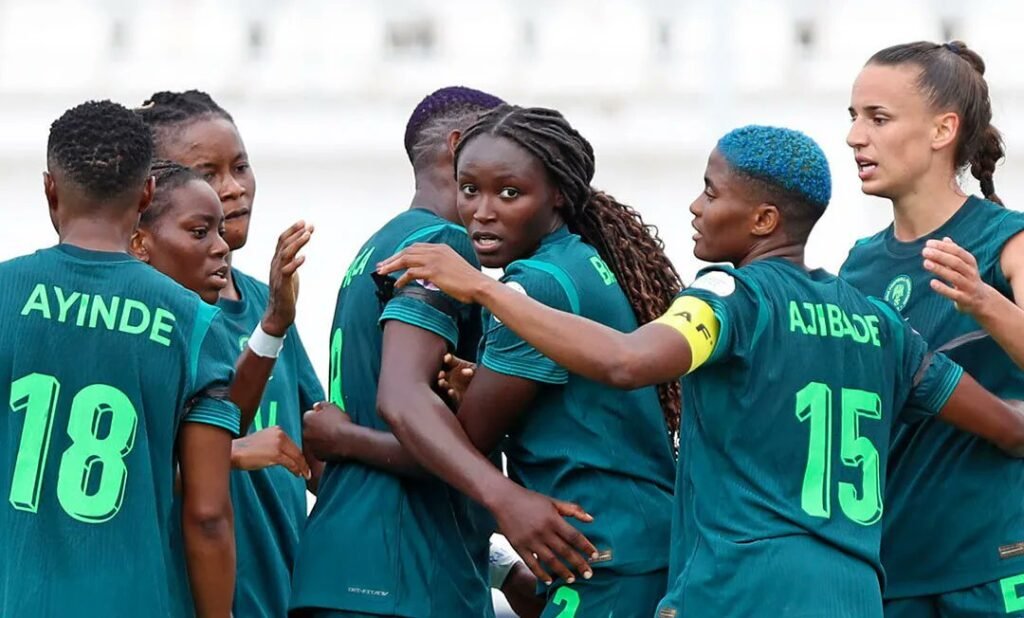
This is not the end of Nigerian women’s football. Far from it.
Nigeria remains Africa’s most decorated women’s football nation and still possesses a deep pool of talented players. The 2025 WAFCON triumph itself demonstrated that the Falcons remain capable of competing with the continent’s best.
But the question is no longer whether Nigeria can win another tournament. It is whether the country can build a system that makes winning sustainable because that is the real challenge.
The Super Falcons have spent decades being the team Africa chased. Now Africa has caught them.
And unless Nigerian football responds with serious structural reform, the uncomfortable possibility is that the Falcons may eventually become what the Super Eagles and several of Nigeria’s youth teams have already become, giants remembered more for what they once were than for what they are today.
Kehinde-Hassan Afolabi
