
By Kehinde-Hassan Afolabi
Manchester City’s reported guilty verdict could open a compensation battle, but Arsenal’s case is uniquely complicated by the key players they lost to City during the club’s rise and the subsequent title battles between the two sides.
Manchester City’s extraordinary Premier League case has now reached the stage that could force English football to confront a question that has been sitting beneath the surface for years: how much did rival clubs lose while City built one of the most dominant teams in modern English football?
With an independent commission reportedly finding the Mancunians guilty of 114 of the 115 charges brought against them, attention has naturally turned towards the possible consequences for the club.
But it has also turned towards the clubs that believe they may have suffered financially because of the competitive advantage allegedly created by the breaches, and among them is Arsenal, yet there is a compelling argument that few clubs have a more complicated history with City’s rise than the Gunners.
City have consistently denied wrongdoing and have indicated that the process remains ongoing, with an appeal expected. That distinction matters because the reported guilty findings do not, by themselves, establish what punishment City will ultimately receive or what compensation rival clubs will actually collect.
Nevertheless, the potential financial consequences for rivals are already being discussed. Arsenal, Manchester United, Liverpool and Tottenham Hotspur preserved their rights to pursue compensation under Section W of the Premier League rules, with successful claims across clubs potentially worth more than £200 million.
The rules allow a disciplinary commission to order a respondent to pay compensation to another club or person where the relevant conditions are met. That means the figure being discussed is a potential legal remedy rather than money already awarded to the aggrieved clubs.
However, for Arsenal, the argument is about more than a balance sheet.The obvious place to start is the pitch. Arsenal did not finish second to City in the 2011/12 title race, when Sergio Agüero’s famous stoppage-time goal against QPR delivered the championship to Roberto Mancini’s side, nor did they finish runners-up in their 2013/14 triumph.
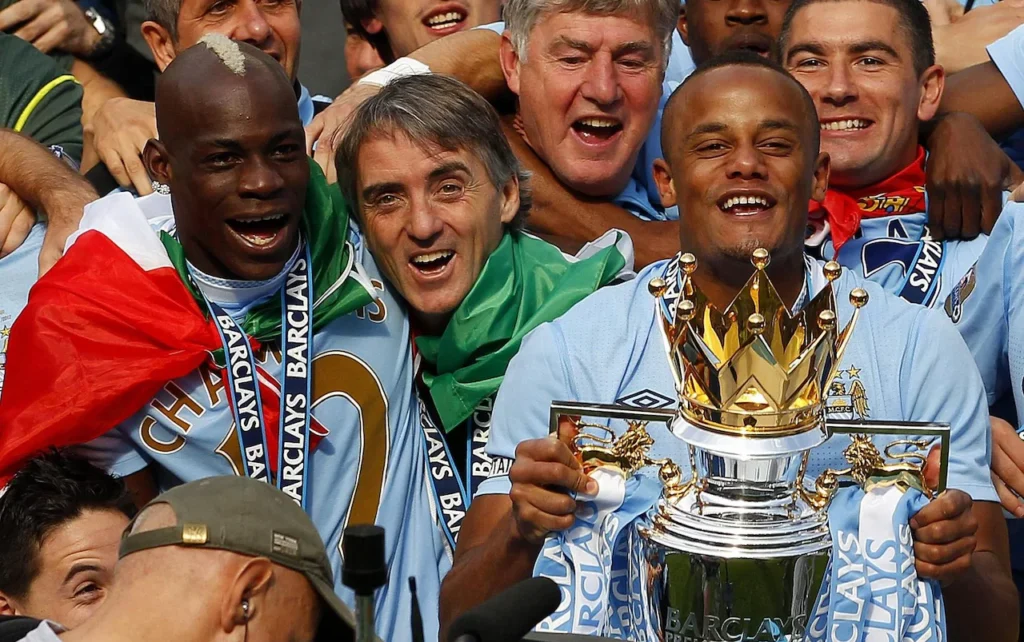
They were not Liverpool, either, who famously lost the 2013/14 title to City by two points. Yet the Gunners’ relationship with City’s rise contains another form of damage that cannot be measured simply by counting titles lost.
That is because Arsenal were not merely competing against the finished Manchester City machine. They were one of the clubs from which City acquired important components while that machine was being assembled.
The 2008 takeover by Sheikh Mansour’s Abu Dhabi United Group changed the landscape. The Mancunians had finished ninth in the Premier League in the previous campaign and had gone 32 years without a trophy, even getting relegated during the same period.
Notwithstanding, within a decade of the takeover, they had become champions, record spenders and one of the dominant forces in European football, spending more than £1.4 billion on players during the first decade after the takeover.
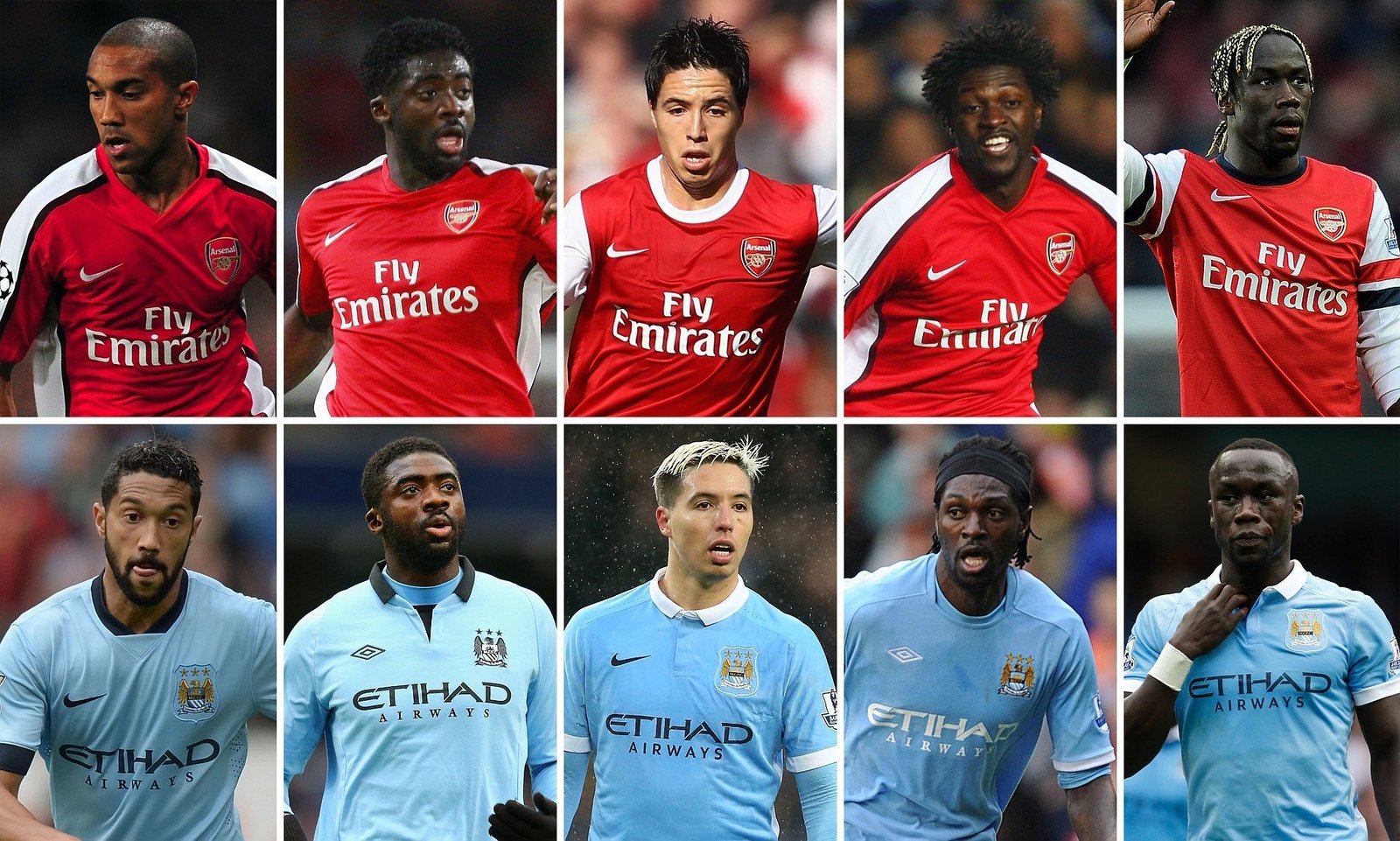
Arsenal felt that transformation particularly closely.Kolo Touré was the first of the major departures, joining City in 2009 after seven years in north London. Emmanuel Adebayor followed that same summer. The Togolese had scored 62 goals for Arsenal before moving to Manchester, while Touré had been an important member of Arsène Wenger’s famous Invincibles side.
Then came Gaël Clichy.
The French left-back had made 264 appearances for Arsenal before moving to City in 2011. Only weeks later, Samir Nasri followed his countryman north in a deal worth around €27 million that generated considerable controversy among Arsenal supporters.
Nasri had been one of Arsenal’s most technically gifted attacking players and had scored 10 Premier League goals during the 2010/11 campaign. At the time, his signing was described as the latest stage of City’s expensive summer recruitment drive.
Bacary Sagna eventually completed the chain, although his move was different because he joined City on a free transfer in 2014. By then, the pattern was difficult to ignore: five established Arsenal players had moved to Manchester City during the period in which City were establishing themselves as a major Premier League force.
That does not prove that Arsenal were deliberately weakened, nor does it prove that any of those individual transfers were illegitimate, afterall, players leave clubs for different reasons, and the transfer market is built around clubs buying and selling players.
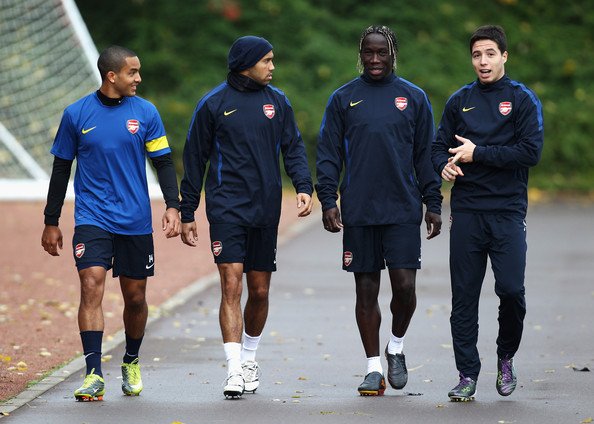
But the wider context is difficult to ignore.
Arsenal were operating under a different financial philosophy. Wenger was attempting to remain competitive while the club carried the enormous costs associated with building the Emirates Stadium. Unlike the emerging City model, Arsenal’s approach required the club to remain financially disciplined rather than simply spending heavily to accelerate its rebuild.
City, meanwhile, were rapidly increasing their spending power and assembling a squad capable of competing for the biggest prizes. The difference was not simply between two football teams; it was between two very different financial environments.
City eventually became the club that Arsenal had to chase. And that is where the present-day compensation argument becomes particularly interesting.
Manchester City won six Premier League titles under Pep Guardiola — in 2017/18, 2018/19, 2020/21, 2021/22, 2022/23 and 2023/24 — including an unprecedented four consecutive championships. Arsenal, meanwhile, finished second behind City in 2022/23 and again in 2023/24 before eventually winning the Premier League in 2025/26.
The 2022/23 season is particularly revealing because the Gunners spent much of the campaign at the top of the table and appeared to have a genuine opportunity to win their first league title since 2004. But City eventually overtook them, and claimed yet another silverware.
A year later, the same story played out again. Arsenal pushed until the final day, but Pep Guardiola’s team finished two points clear after winning their final nine matches, including a 3-2 victory over West Ham United on the final day.
Those two title races cannot simply be retrospectively attributed to the financial charges. Yet the compensation argument is based on precisely this kind of counterfactual question: what opportunities might have existed for rival clubs if the alleged financial breaches had not occurred?
For Arsenal, that could extend beyond league finishing positions. A higher league position can generate greater domestic distributions, while Champions League participation creates another substantial revenue stream. For years, the Gunners also failed to teach the Europe premier competition.
That is why the potential legal claims could become far more complicated than simply asking which club finished second to City.
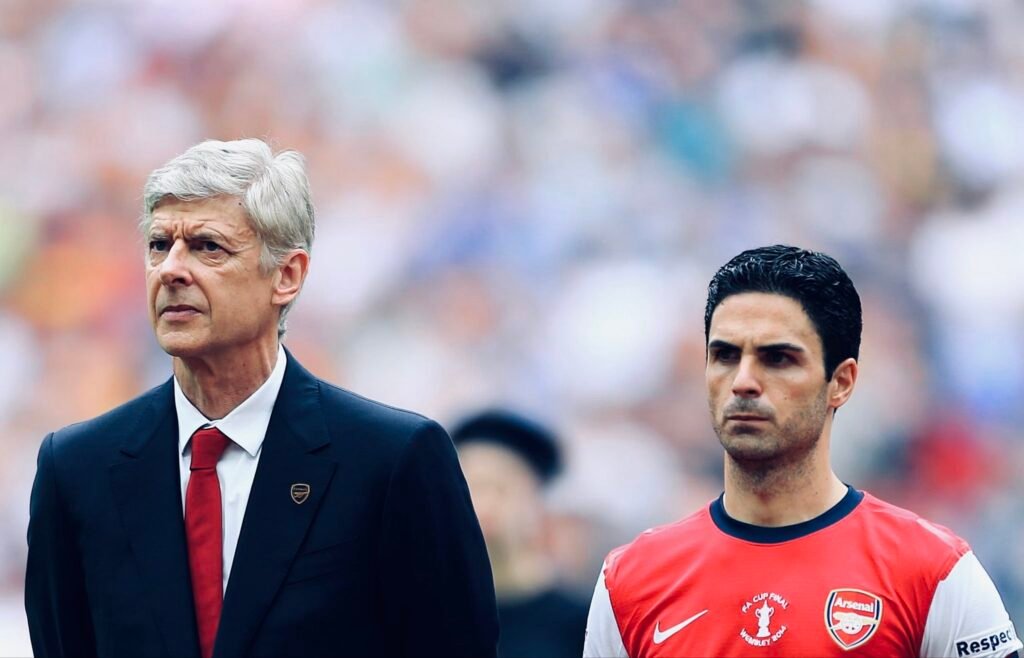
There is also a historical irony to Arsenal’s position. The club that once sold key players to help City build their squad eventually became the team most consistently pushing them at the summit under Mikel Arteta.
The Spaniard himself spent time at City as Pep Guardiola’s assistant before returning to Arsenal as manager, and his rebuilding project eventually turned the Gunners back into genuine title contenders.
By the time Arsenal challenged City for consecutive championships, the relationship had almost come full circle. The club that had watched several important players leave for Manchester was now attempting to knock the finished product off its perch.
And that is why the question of whether Arsenal were among the most affected clubs requires more than a simple calculation of compensation. While Manchester United and Liverpool can point to title races lost to City, the Gunners’ case is different because it combines the financial argument with a decade-long sporting relationship with City’s rise.
They unwillingly supplied players to the emerging City project, were forced to compete against the financial power that project created, and eventually became one of the few clubs capable of seriously challenging it. Now, after the reported guilty findings, they are among the clubs preserving their rights to seek compensation.
None of that establishes that Arsenal are legally entitled to a particular sum, and it certainly does not establish that every trophy City won should automatically be transferred to another club.
But there is a broader historical question that will not disappear.If the reported findings ultimately stand, football will have to consider not only what Manchester City gained, but also what their rivals may have lost.
For Arsenal, that question reaches back to the summer of 2009, when Touré and Adebayor left for Manchester, through Clichy and Nasri in 2011, Sagna in 2014, and ultimately to the title battles of the Arteta era.
The £200 million figure may grab the headlines, but it is the less tangible losses that make Arsenal’s story particularly intriguing. They lost important players, spent years trying to rebuild competitively while a new power was being established next door, and had to contend with the consequences of City’s extraordinary rise amid the financial-rule breaches at the centre of the Premier League case.
Whether Arsenal can turn any of that into a successful compensation claim is a matter for the legal process.
Whether they were among the clubs most profoundly affected by Manchester City’s transformation is a much larger football question — one that the verdict has now made impossible to ignore.
